
Features
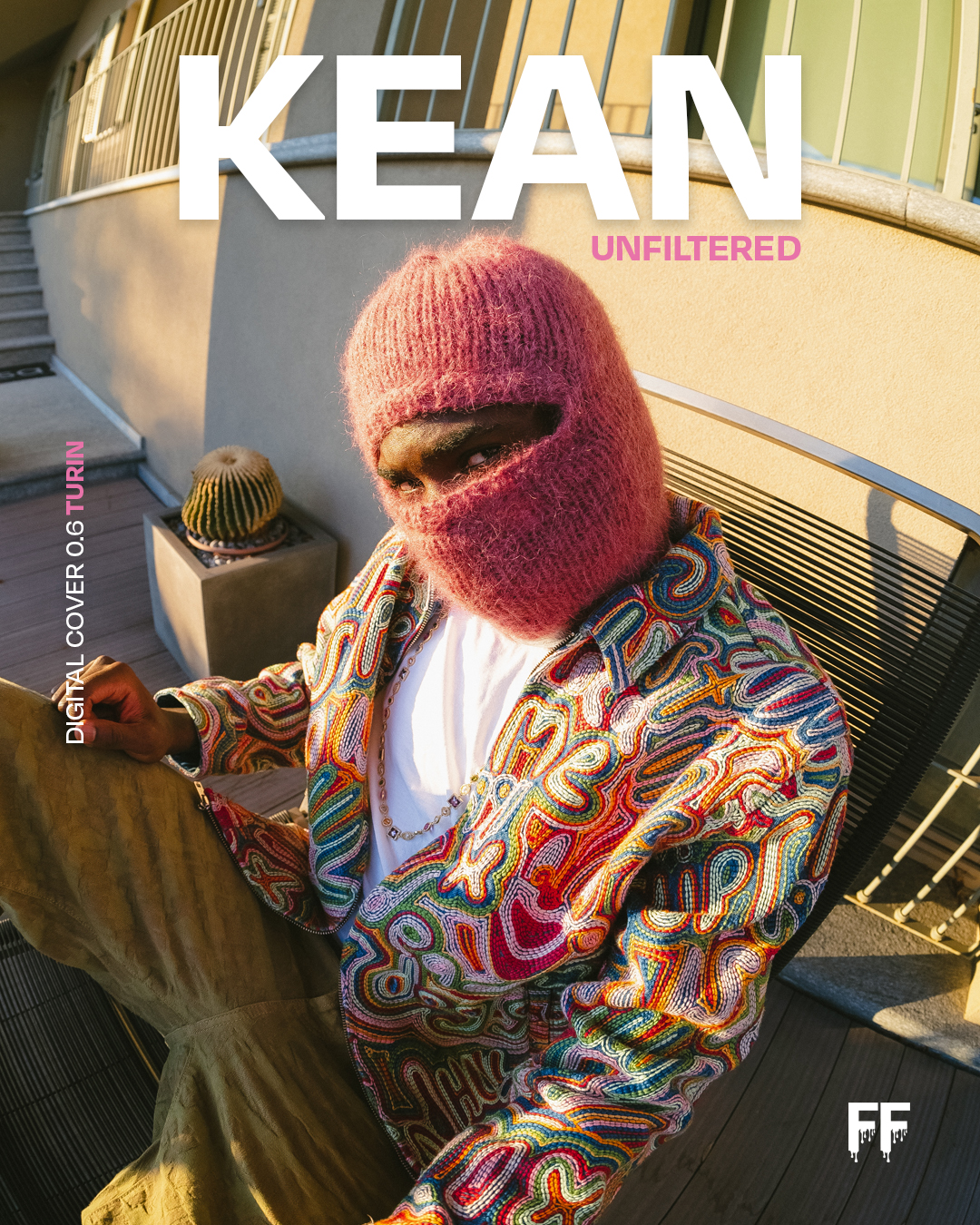
Moise Kean isn’t like other footballers

In a sport in which the art of self-expression and individualism has become a dying art, Moise Kean is an outlier.
From his unique social media feeds to his hit celebrations on the pitch – most notably the Griddy – the 22-year-old fears no one in his mission to be true to himself, even in the face of backlash from those still adopting football’s traditional and outdated mindset in which athletes should be one-dimensional.
The Juventus striker is still on his way back from training when I arrive at his Turin home a few minutes before our agreed meet time, prompting concern that I may have arrived at the wrong destination. Loading up Instagram, I hit him with the update that I’ve arrived, still hopeful that the gated entrance I’m staring at belongs to Kean. “Coming bro,” he responds just seconds before pulling up behind me in what would be the start of a day spent with one of football’s most unique characters.
The sun is shining in the Turin and specifically on the driveway, providing a crystal clear sight of the Italian hopping out of his car to greet me. Kean is rocking a New York Yankees beanie, a Primitive Tupac Shakur t-shirt, MARKET smiley face tie-dye joggers and Louis Vuitton LV skate sneakers in Marine White, colour-coded to perfection, confirming his renowned styling ability in an instant.
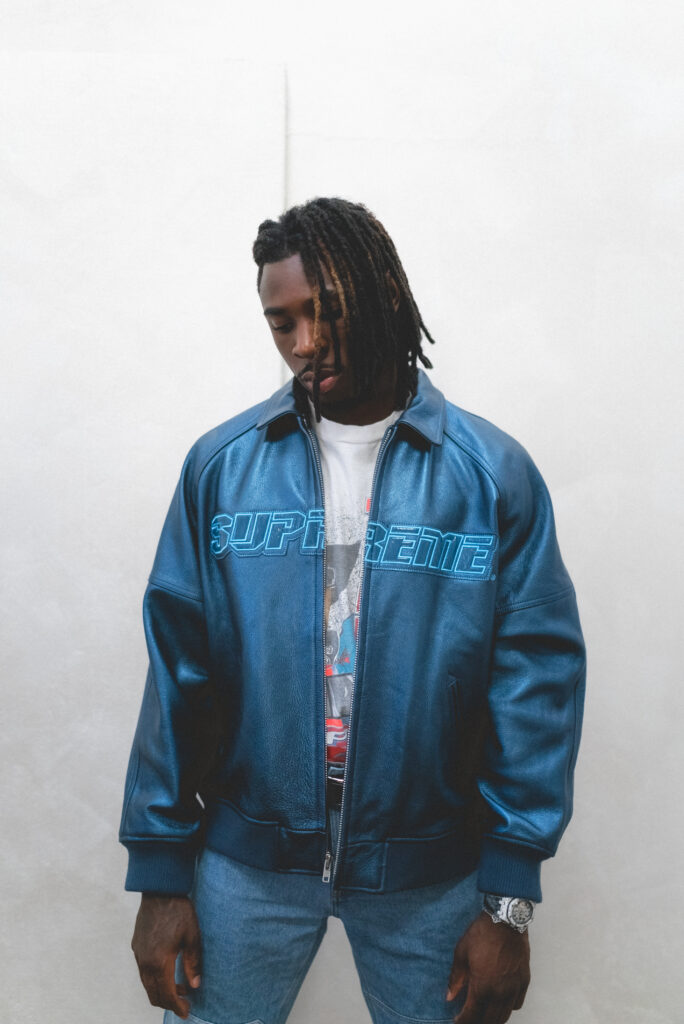
“Have you eaten?” Kean asks me as we enter his home. I respond that I have already, having visited a small Italian restaurant nearby for some pasta an hour prior. “Let me show you around,” he adds.
Around the house, Kean’s closest friends and family can be seen. “For me, family is everything,” the Vercelli-born baller tells me. “Around me, I have all my family. I don’t have new people or new friends, the people around me are just family. Family is so, so important.”
One of those people is close friend, Jonathan Sulaj. Sulaj, a semi-pro football player himself, is residing on the staircase that separates the living room from the second floor wearing a Juventus shirt graced with Kean’s name and number eighteen on the back. Despite the friendship dating back to their childhood, Sulaj jokes that he has to fight against the others in the house to get one of Kean’s match-worn shirts, making it no surprise that he’s wearing it with pride.
“If we go out in Turin, it’s game over,” Sulaj tells me on the occasions Kean is spotted by fans in the city. “The kids will come shouting ‘Moise! Moise!’. It can get so crazy we have to leave!”
Kean’s popularity amongst young football fans comes as no surprise. Yet to turn 23, he has already featured for Juventus, Everton and Paris Saint-Germain at club level whilst also representing his country with Italy, scoring four times in twelve occasions for the Azzurri.
“It’s a good thing,” Kean says on the trio of clubs he’s already featured for. “I try to see new things and play with big players. It’s a dream of everyone to play for the biggest clubs in the world. I’m lucky to have this opportunity to keep doing good.”
The journey to the biggest clubs in the world wasn’t simple for Kean, though. In a previous interview, his mother Isabelle revealed how her son hid that he had swapped school for football training for over a year to pursue his dreams against her advice, only revealing the truth after signing a professional deal with the Bianconeri.
“We had little money,” she told Tuttosport in 2019. “One day, Moise calls me on my way to work at 5.30am and says ‘Mum, I have a surprise’. I told him ‘No, don’t tell me you didn’t sign with Juventus’ and he replied ‘I did and starting today you will quit your job and live with me in Turin’.”
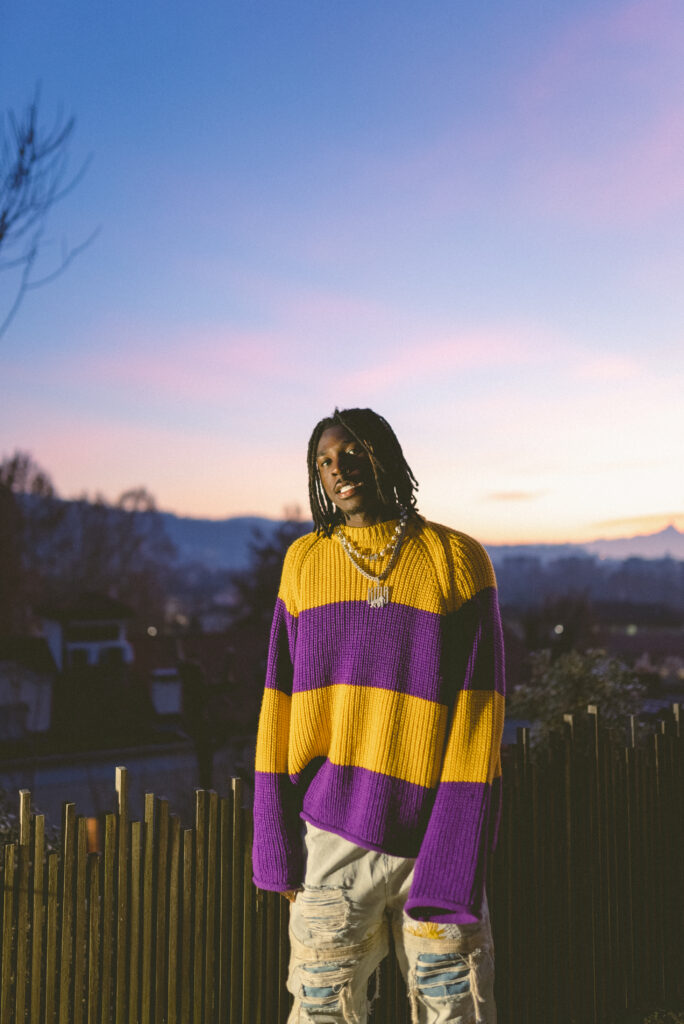
Taking Kean back to that moment, I ask him to describe the feeling he had delivering the news to such an important figure in his life. His eyes light up and a grin across his face follows. “It was so emotional telling my Mum I had signed with Juventus,” he says.
“I knew that was the big jump to do a lot of big things and have the things I’d always dreamed about since I was young. It was a very good but emotional moment for me.”
From his love of Meek Mill to his viral celebrations inspired by U.S. culture, there’s little room for comparison between Kean and any other player in football. The youngster brings his own unique vibe off the pitch that many of his peers both admire and attempt to replicate themselves. His Instagram feed sees each picture covered with a warm, grainy filter – which he tells me he edits himself – titled with captions of self-confidence and reminders to his doubters. In doing so, Kean has created a highly-engaged social following of young football fans eager to see what vibe he brings next, something he puts down to simply being himself.
“You need to be yourself all of the time in the small things and the big things,” Kean explains.
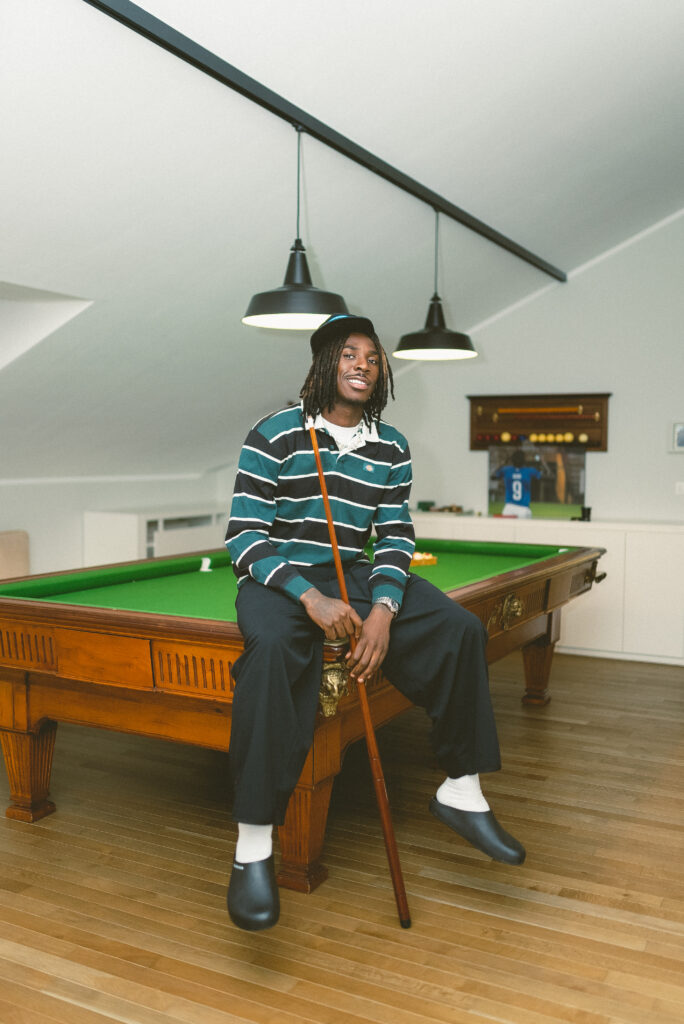
“When you’re at home and when you’re on the pitch. Keeping the same personality is important and most of all, being real with yourself. I think that’s basic. I think [being different] is something I’ve always had in my head. Everyone does the same thing a lot and sometimes it’s good to change and show people something new.”
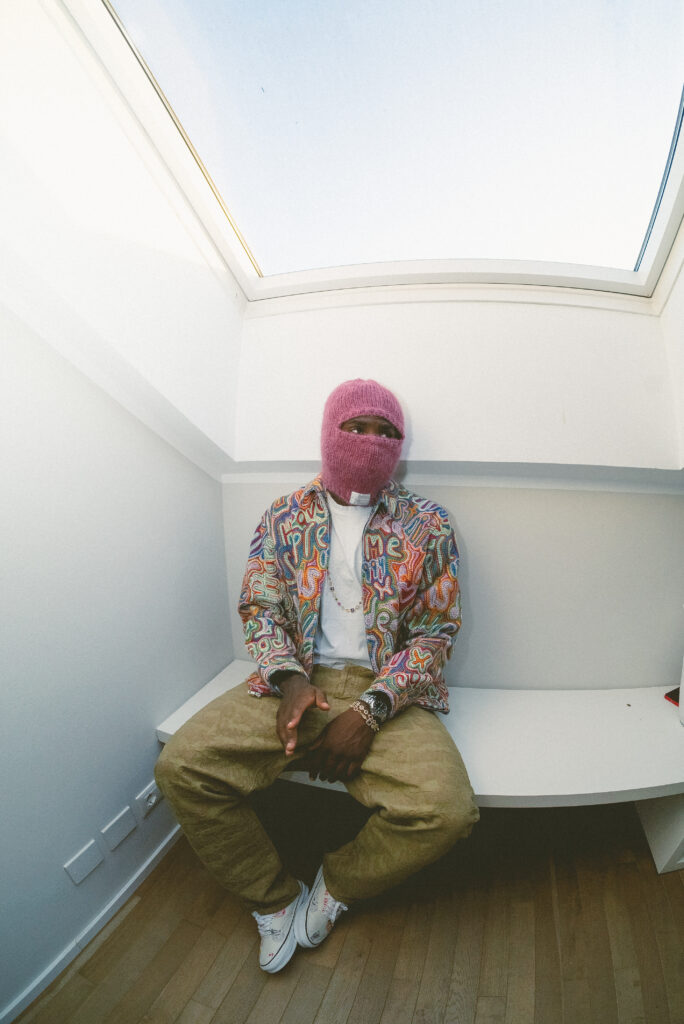
Nothing represents this better than Kean’s style off the pitch. Straying far from the lane of copping designer brands and hype logos for flexing purposes, the most common item in his wardrobe is affordable vintage graphic t-shirts with designs ranging from old-school rap artists to the late Virgil Abloh, a piece he cherishes greatly.
“I buy what makes me feel good. I dress to catch the eyes of people and to be different,” Kean explains to me. “Some people dress because they see it’s Louis Vuitton and they need to take it because it’s Louis Vuitton, but I don’t really do that. I can wear the worst brands ever but I just try to make it look good.”
“In my wardrobe, I don’t have many brands. I just look at everything when I go into the shop and I take my time. When I’m shopping I take like two hours. Nobody needs to bother me,” Kean laughs. “I just want to stay there and go to all the shops.”
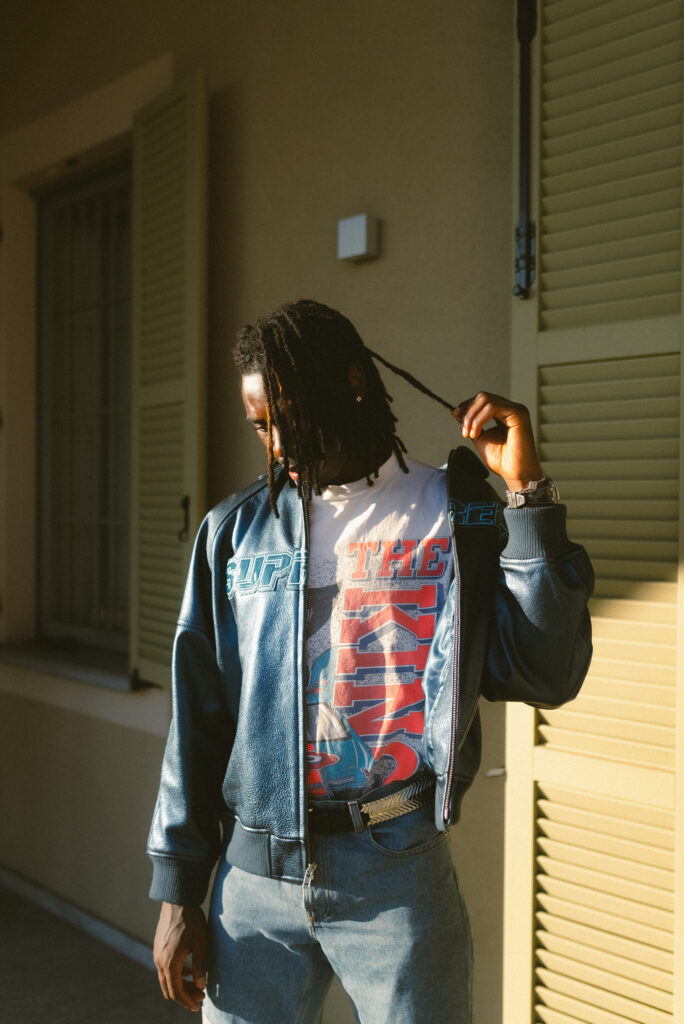
Though Kean is no stranger to self-expression, the rise of interest in fashion from players has accelerated rapidly in recent years. Players such as Jack Grealish and Kylian Mbappé have seen themselves earn huge ambassador deals for luxury fashion houses Gucci and Dior respectively whilst AC Milan’s partnership with Off-White broke the internet when the Rossoneri arrived at Stamford Bridge ahead of their Champions League clash with Chelsea wearing varsity jackets designed by the Milan-based brand.
“There was a time when everyone wore the same thing,” Kean says, reliving the early days of footballer fashion. “A Dior jacket, the tight Amiri jeans and even Louboutins. I was like ‘wait, everyone looks the same’. Nobody was showing themselves. But now it’s different.”
I quiz Kean to name any players in the game whose style he admires. “I like Héctor Bellerín, I really, really like how he dresses. After that, I was at Everton with Tom Davies and he is really different. He has his own world, you know? That’s good and I really like how he dresses. Serge Gnabry too, I almost forgot him!”
“At Juventus?” Kean says, firing my question back at me before pausing for a moment to think over the style of his teammates. “They’re different because they dress more Italian and classic, you know, how Italian people dress,” he smiles. “But I agree with that because it’s their type of tradition. They all have the same style and I can accept that.”
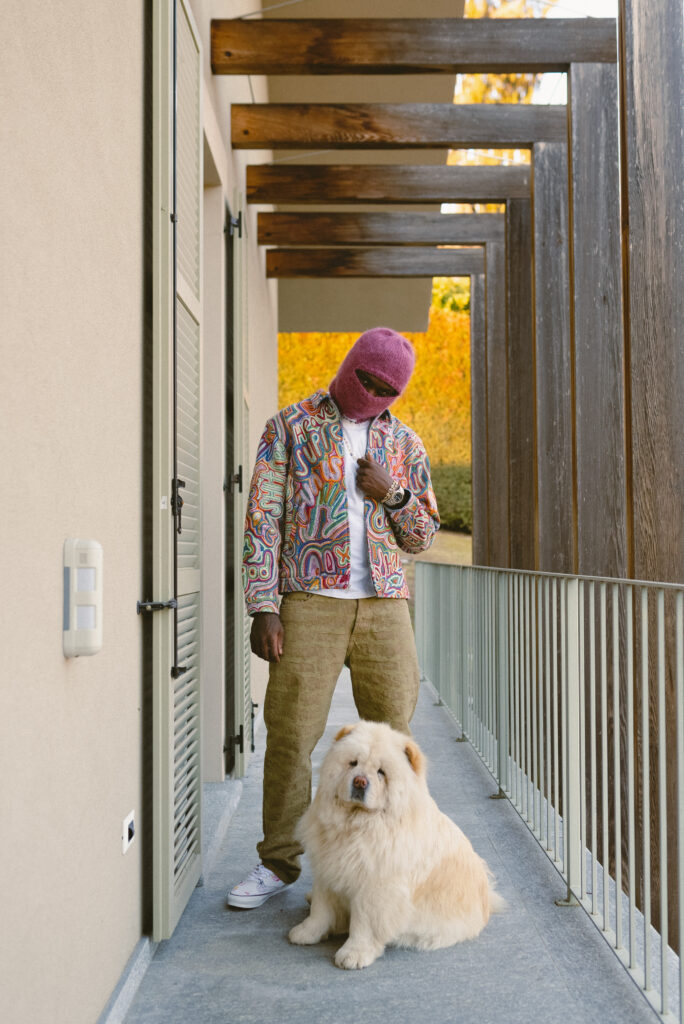
Whilst Juventus often arrive suited and booted before each game in the classic Italian style Kean has just described, Barcelona have taken a different approach to fixtures at the Camp Nou, allowing players to wear their own outfits in a similar fashion to the pre-game tunnel fits we see in the NBA. Barça defender Jules Koundé has become a highlight of this, regularly going big with each fit that has created huge fashion-driven conversation across social media and with Xavi’s side sitting at the top of La Liga at the time of writing, it has disproved the ideology of critics who believe players are not capable of holding an interest in fashion whilst maintaining full concentration on their careers.
“Oh wow, hell yeah! Yeah!” Kean responds when I ask if he’d like to see similar pre-game fits spread across all of football. “You need to make the player feel good, you need to make the player feel confident and when you do this type of thing, coming dressed the way you want, you get to represent yourself. All the time when you dress, you’re representing yourself and that’s what people need to see.”
Though pre-game fits haven’t made it to the Allianz Stadium just yet, Kean has found another way to represent himself – goal celebrations. From the ‘Woah’ to ‘The Griddy’ – both of which were introduced to football by Kean – clips of his celebrations regularly go viral on social media platforms where young people live, such as Instagram and TikTok.
Justin Jefferson, a wide receiver in the NFL for the Minnesota Vikings, first did The Griddy on the sporting stage whilst NBA and Memphis Grizzlies star Ja Morant is also known for dropping the dance move on the basketball court. Comparisons between Kean and Morant have been drawn by fans online and Kean admits his love for U.S. culture is what inspires his celebrations.
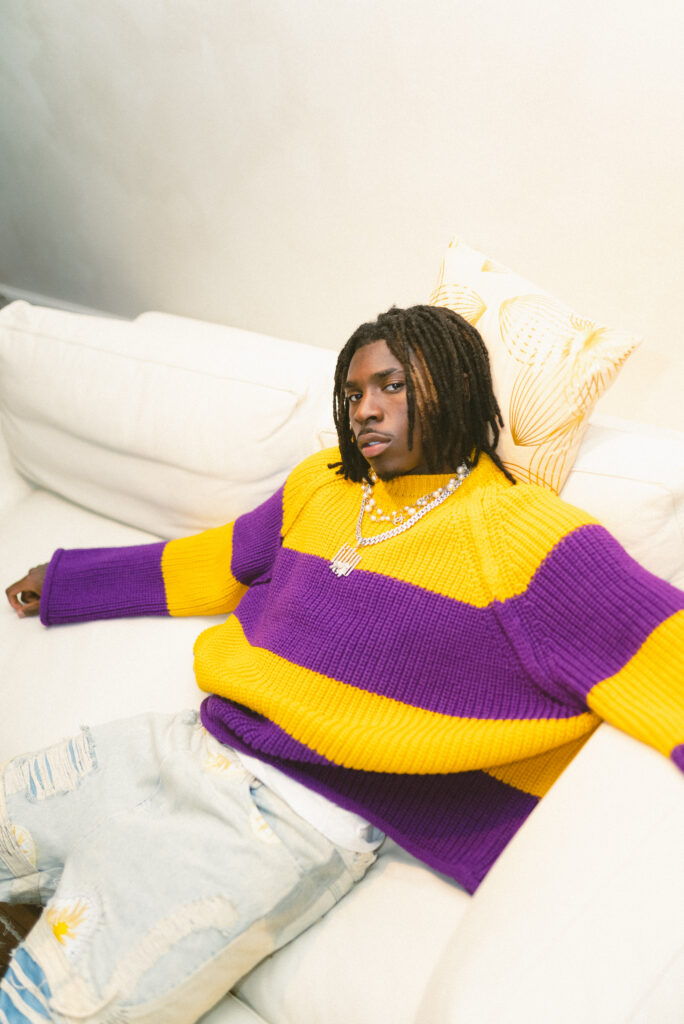
“I have a lot of players I like that play in the NFL and in the NBA. When I go on holiday there, to the U.S., they always do celebrations that are fun to do.” In regards to what his next celebration could entail, Kean isn’t one to tell. “I’m going to keep that one [The Griddy] for the moment”, he says with a smile. “But after? I don’t know. I won’t tell secrets and it needs to be a secret.”
In one of the rooms of Kean’s house lies a small studio set-up complete with LED lighting decorating the monitor and its surroundings. Naturally, I’m intrigued to hear his ability in music having already seen his talents in football and fashion. As expected, Kean is able to deliver on the mic. He plays me unreleased tracks made alongside his friends on his computer in which he can be heard rapping over beats in Italian. With little knowledge of the Italian language, I’m unsure exactly what bars Kean is laying but with the flow as cold as just about everything else he does, knowing what’s being said wasn’t necessary.
“My favourite rappers are Meek Mill and Kodak Black,” Kean tells me on his own music taste. “Right now, I’m more on Kodak. I really like and enjoy his music. My favourite album of all time? Wow… Bro, you have some hard questions,” Kean laughs again, struggling to nail his wide-ranging music taste down to just one title.
“Favourite album of all time…” repeats Kean, giving himself some extra thinking time. “Meek Mill – Championships,” he responds, later adding Bob Marley & The Wailers’ albums as a worthy second.
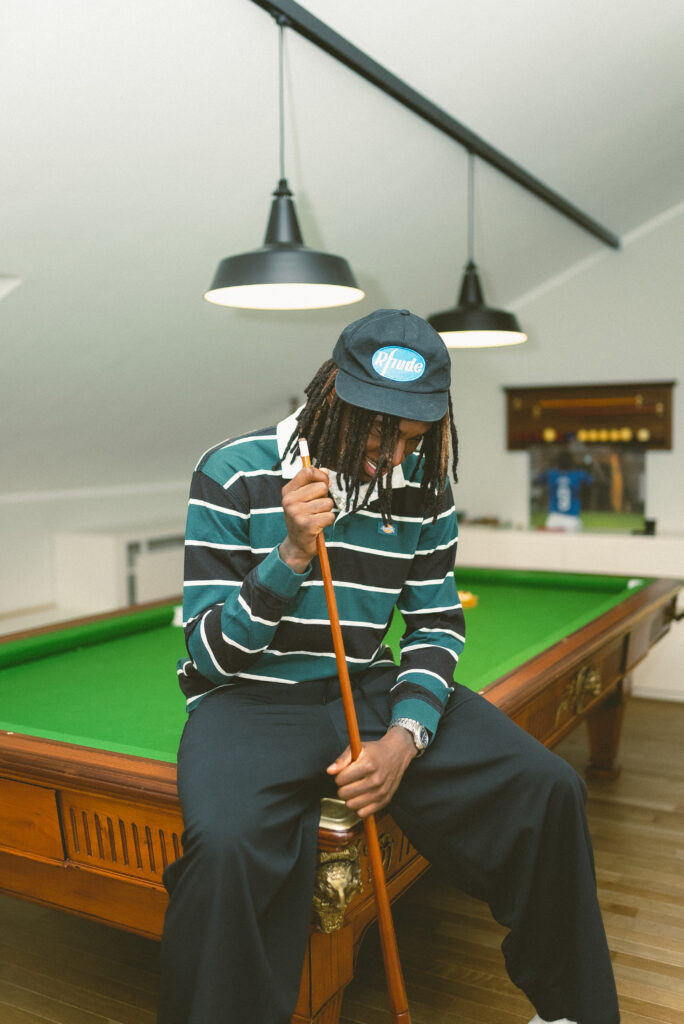
Almost eight hours after first meeting Kean, my time with him is drawing to a close. It’s approaching 10:30pm in Turin and I find myself around a table at a local Brazilian restaurant alongside Kean and his friends eating things I’ve never had the pleasure of eating before. Opposite our table, Kean’s favourite music videos are playing on a TV hanging from the wall with the likes of Migos and The Notorious B.I.G being heard before Ice Cube’s ‘It Was A Good Day’ begins to fill the room.
“If you don’t know this song, get out!” Kean jokes before asking everyone around the table one by one if they know the iconic track. Silently, I begin praying that my answer doesn’t require the title of the song which has slipped my mind in the moment of stuffing myself full with cooked Pineapple. Luckily for me, my ‘yeah of course’ response would earn me Kean’s seal of approval shortly before we came to the end of the meal.
In Kean, I was given first-hand evidence of an athlete who was the total opposite of what a young, elite-level 22-year-old footballer with financial freedom is stereotyped to be. In my last moments with him, Kean thanks the production team of myself, Shane and Jack – who are on photo and video – for our work and is happy to pose for a group photo. His interest if I had eaten just minutes after arriving at his house only furthered my opinion of him and if the aforementioned things weren’t enough, his gesture of inviting me to dinner alongside his friends – at no expense to me – in addition to the hours of his time he gave me certainly is.
A triple-threat with his ability in football, fashion and music, Moise Kean isn’t like any other footballer and he wants you to know it.
Photography By: Shane Bain
Styling By: Moise Kean himself








‘Surely with hardship comes ease’ – Surah Ash-Sharh (94:5-6)
They often say you are a product of your environment. But Oday Dabbagh is living proof that you can embrace the experience of different cultures while being a powerful representative of your nation. We sat down with the 26-year-old Palestinian striker to delve deeper into his journey so far, the importance of authentic representation, self-expression through different mediums, faith, and much more.
Oday Dabbagh rose to global acclaim during his recent loan spell at Aberdeen, making the move to Scotland in the January transfer window earlier this year. The move proved fruitful for the striker as he ended the season a champion, lifting the Scottish Cup. His form has since earned him a summer move to Egyptian powerhouse, Zamalek SC, swapping the Scottish Highlands for the Cairo sun.

(Jack Rowley)
Born and raised in the Old City in Jerusalem, Dabbagh reflects on his childhood with great fondness. “It was a beautiful childhood. Since I was young, I used to play football in the alleys of the old town, and my relationship with my family was wonderful. I will say, they cared more about studying than football, but we found a compromise in the end.” [laughs]
A keen footballer from the very beginning, Dabbagh was one of many Palestinian children playing football with their friends at any opportune moment. Given the nation’s passion for the game, I was curious to learn more about why football plays such a big role in Palestinian culture.
“I think globally, this sport is so important because it really brings people together – fans, teams, players, countries. For us, it gives our people an incredible sense of pride. But beyond that, sport is powerful because it’s a gateway to build bridges.”
For Oday Dabbagh, football was that bridge, allowing him to play the sport he loves professionally. Despite typical Arab familial expectations on pursuing education, which I’m sure many of us can relate to, Oday’s breakthrough into the professional game came while he was just a teenager.

(Hussein Mardini – 3XV Sports)
“It was a wonderful feeling. I was very motivated to show my abilities, and that experience was the start of everything for me. That launched me into the Palestine U-18 Youth National Team Championship. To be honest, I didn’t expect to reach that stage at the time. I think I’ve always focused on working hard in the moment rather than anticipating what could be or what could come next. That mindset probably reduced the pressure on me.”
Making his professional debut in the Palestinian domestic league for Hilal Al-Quds at 16, he then guided the club to three consecutive West Bank Premier League titles. And became the league’s top goalscorer in 2019, bagging 16 goals.
Staunchly determined to succeed, Oday’s domestic exploits meant the youngster was garnering attention across both Europe and the Middle East, with the then-20-year-old opting to make the move to Kuwait. In the face of European interest, one would assume that it would be the most desirable option, but once again Dabbagh displays the level-headedness that has held him in good stead thus far in his career.
“I chose Kuwait because it was my first professional experience, and I wanted to adapt in an Arab country first. It turned out to be a really good decision that prepared me for Europe later.”
View this post on Instagram
Despite the elation of securing his first professional contract abroad, Oday admits to having mixed feelings about leaving home. “My feelings were mixed… joy, sadness, and fear. But once you get on the plane, those feelings disappear because you know you’re going toward your goal and you have to achieve it. Of course, I missed my family and friends, and that was difficult. But I learned a lot, and it only strengthened my dedication to my dream.”
Since making the move to Kuwait, Oday has played in six different countries, and he can’t speak highly enough of the experiences he’s had, particularly the impact it has had on developing his style.
“I’m really happy I played in so many countries. I learned new cultures, met new people, and picked up different styles of football. It made me adaptable. With style, each place has its own identity, but you also get this mix of cultures from other players – music, fashion, food, language… That has shaped me a lot, on and off the pitch.”

(@IMAGO)
Thriving at club level, Oday’s most prolific achievements have come on the international stage. Representing Palestine, the striker has gone from strength to strength with the “Lions of Canaan,” becoming the nation’s all-time top scorer with 16 goals in 45 appearances. Not only is he putting the nation on his back on the pitch, but Oday is a proud ambassador of his Palestinian identity, as he doubles down on how important the role is to him.
“I believe that this did not come out of nowhere; it came as a result of continuous work and commitment. I am truly proud to be a representative of my country, and I certainly thank every person who supported me or helped me to reach this level. It is a great thing to be an ambassador for your country.”
But football isn’t the only medium through which the 26-year-old chooses to express himself. A self-proclaimed fashion head, Oday’s style is equally versatile and experimental. Perhaps that may come as no surprise, given the melting-pot of experiences he’s had playing in six different countries.

(Hussein Mardini – 3XV Sports)
Most importantly, Oday firmly believes in the power of fashion as a vehicle of self-expression and identity, “It’s very powerful. It gives us the space to be ourselves and to show the moments and experiences we’ve picked up along the way.”
Not only does he represent his identity through football and fashion, but his very name pays homage to the culture he holds most dear. Names possess significant meaning in Palestinian culture, and so with that in mind, I asked Oday what his name means, to which he said: “Adi is an old Arabic name that means ‘running’ or a ‘fast enemy.’ Quite ironic, when one considers his attributes on the field, with speed and tenacity key hallmarks of his game.
‘Surely with hardship comes ease’ – Surah Ash-Sharh (94:5-6)
A powerful verse from the Quran that serves as a reminder that every difficulty is accompanied with relief, and even in difficult situations, there are blessings and ease.
With hardship an inevitability in football, it is crucial to bounce back from tough situations, and I was keen to explore how Oday motivates himself during periods of difficulty in the game.
“I tell myself that I am here to achieve a goal, and I cannot give up. And that is how I overcome difficulties. I talk to myself and motivate myself every time. Then I have my family, faith, and a deeper dream to make a difference. I do want to inspire young players. And when I remind myself of all of these things, I never stop pushing forward.”

(Palestine National Team)
At just 26, Oday Dabbagh’s story is far from over; from making his mark domestically, to securing his first professional contract and leaving home at just 20, to now being the face of the franchise for his national team.
As he settles into the lively city of Cairo, surrounded by history, the forward has not once forgotten his roots. Motivated by his hardships, a determination to make his family proud, and fulfil his goals, Oday is fast “running” to the top as one of the most influential figures in the game, transcending the boundaries of football, fashion, and identity, not to mention the “fast enemy” being a constant thorn in the side of opposition defences.
After reflecting for the vast majority of this conversation, it seemed poignant to conclude by looking ahead, asking Oday what he would like his legacy to be.
“That I gave it my all on and off the pitch, and that I took that, and used it to make an impact for the next generation. And that next generation did the same.”
Forever selfless, Oday Dabbagh is an inspiration and a role model, determined to use his growing profile to embrace his identity and advocate against injustice. Dabbagh’s career thus far has been remarkable, but his story has just begun.

As he celebrates his 28th birthday, Marcus Rashford will no doubt be aiming to push on after his strong start to the season, racking up 11 goals and assists in just 11 starts. But while Rashy invariably looks forward, we decided to look back, paying homage to the work he’s done and the impact he’s had, especially off the pitch.
The Mancunian burst onto the scene back in 2016, introducing himself to the Old Trafford faithful with a brace in the Europa League against Midtjylland. That same week, Rashy bagged yet another brace, this time in the Premier League against Arsenal. Destined for greatness, the path hasn’t always been smooth, but one thing is for certain: Marcus Rashford is the voice of the streets.

More than a footballer, Rashford never forgets his roots. Not only did he force a government U-turn during the COVID pandemic over free school meals, but he has also built libraries in primary schools across the UK and consistently supported his former primary school in Wythenshawe. Not to mention linking up with Carl Anka to write inspirational books for children.
From books to the booth, it’s no secret Rashy rocks with Lil Baby – just look at the EFL Cup celebrations in 2023 with Jadon Sancho. MBE has also linked up with DBE, as well as fellow Mancuinian Meekz. After a tough few years, Rashford has been ‘DUE4AWIN’ for a while, and he’s running it back in style this season.

Coming a long way from matching fits with Jesse Lingard, Rashford knows how to put it on. But after making a stand for what’s right, and giving back to those less fortunate, a situation Rashford can personally relate to, the pendulum of favour shifted. Despite his positive contributions, his charitable work has often been weaponised against him, in response to normal fluctuations in form. As layering chains, and supporting the next generation of underprivileged children, became seemingly incompatible.
The backlash he faced after his trip to watch the New York Knicks last November, epitomises the intense scrutiny players face when simply expressing themselves, as most of the discourse challenged his professionalism and used his outfit as justification of said criticism.
First and foremost, Rashford looked fly as hell in his LV hoodie and chains, not to mention the dope gold grillz. But most importantly, why is it being used against him when he is entitled to rock whatever drip he wants to? The whole narrative in mainstream media around black footballers and black athletes in general when it comes to self-expression needs to be questioned.
There is a fine line between criticism and personal attacks, and it often feels as though the discourse is targeted at Marcus the person rather than Rashford the footballer.
Granted his form during the trip wasn’t the best but he would be the first to admit that. Ultimately, you can criticise his efficacy on the pitch, but a line must be drawn.
In a time of increased mental health awareness within football, the media must be held responsible for their persistent efforts to challenge his integrity as a human being. Rashford has made some mistakes, and he will likely continue to make them, but what individual in their twenties hasn’t? Whenever the media discusses Marcus Rashford, they mention his wages, cars, and clothes. Yet, there is complete silence when it comes to his positive work.
From 39, to 19, to 10, Rashford is on his way back to being number 1. Whether he’s backstage at DBE concerts or linking up with Prince William, Rashford has always been more than a footballer. A cultural icon for his playing style, philanthropy, and positive impact, it’s time we appreciated what he has achieved at a young age.
In the words of Marcus Rashford: “If you back me, good. If you doubt me, even better.”
Happy Birthday, Rashy.