

Features
An Ode To Mario Balotelli: Football’s Original Style Icon

Few players have dominated headlines, on and off the pitch, as much as Mario Balotelli has done throughout his career. Yet, despite the enigmatic striker’s exploits in the game, too often the coverage surrounding the forward has been overly negative.
But beyond the condemnation and criticism, there is more to him than meets the eye. A baller, a maverick, but above all else an icon. There is only one Mario Balotelli. An OG of individuality, Super Mario was playing a different game than the rest.
Back in 2010, the then-18-year-old was on top of the world, having ended the season as a historic treble winner with Inter Milan, and was subsequently awarded the 2010 Golden Boy Award. That summer, Balotelli was reunited with his former manager Roberto Mancini at Manchester City, making the move to the Premier League for a fee of £25 million.
At just nineteen, the striker had the world at his feet. But as he celebrated his 35th birthday last month, there was little recognition for Super Mario’s impact on the game, both on and off the pitch.
While his talent was indisputable, the Italian’s career has often been marred by accusations of ill discipline. But no matter the perspective on his career, there is no denying that Mario Balotelli was an icon of the game. Personality personified, he was always himself.
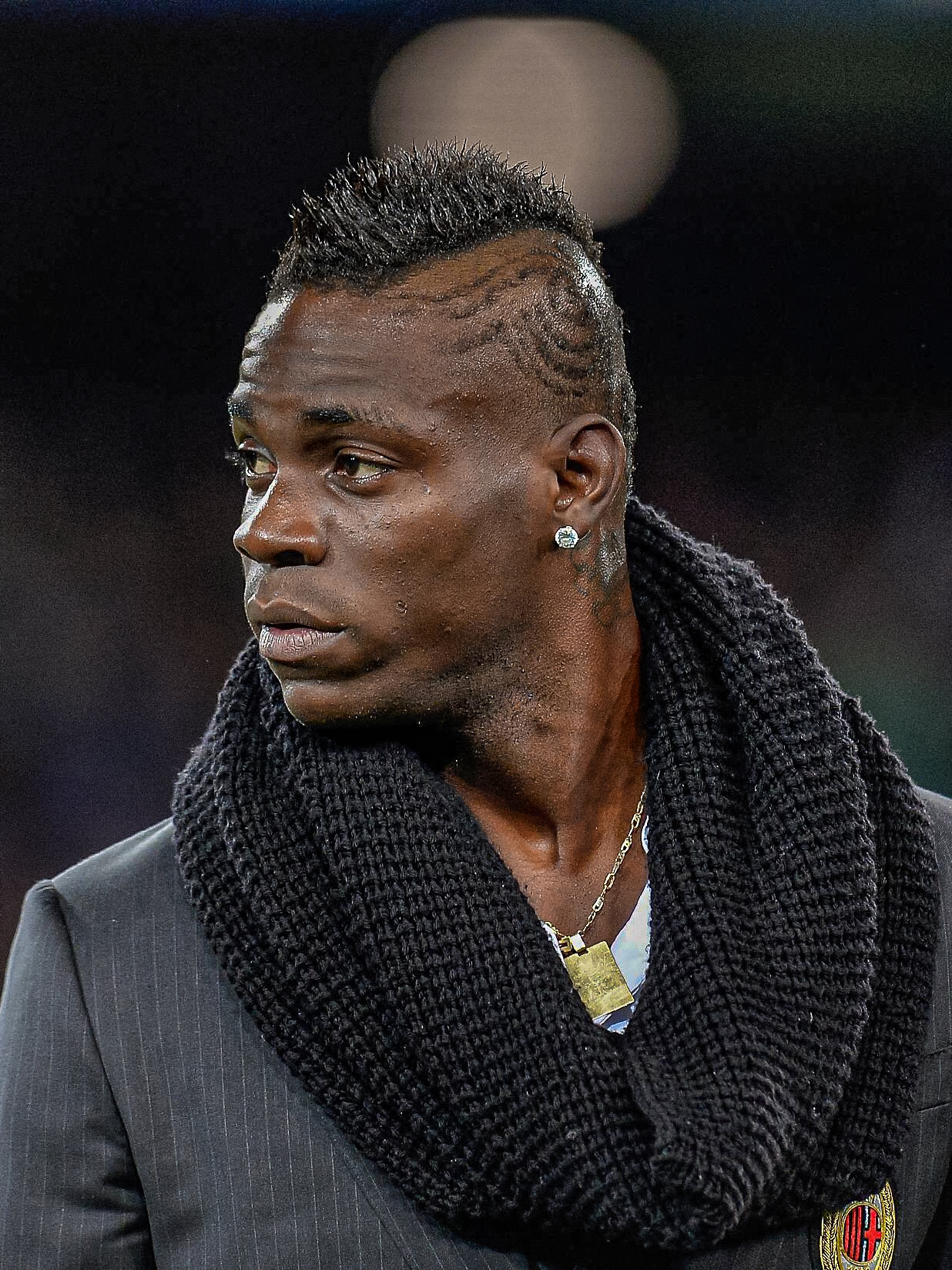
For both club and country, the striker was equally renowned for his eye for goal and his eye-catching trims. Many will recall his signature mohawk look, alongside the various iterations of his different styles, as synonymous with the striker, and Balotelli wasn’t shy to put a twist on his preferred trim.
On the pitch, he was often the main attraction, and talent aside, he had a penchant for capturing the headlines.
One of his most memorable moments came during a 6-1 win for Manchester City in the Manchester derby back in 2011, as he celebrated his goal by raising his shirt and revealing the message – ‘Why Always Me?’ A strong response to the media attention surrounding him at the time, this became one of the most iconic celebrations in the English game. Not to mention the iconic flexing celebration during the 2012 Euros, as Super Mario took his nation into the final.
Both celebrations garnered a level of attention around the effervescent forward that was unheard of, particularly in a pre-social media age, and their repeated resurfacing today is yet another reminder of Mario’s impact on the game.
However, it was off the field that Mario truly made his mark.
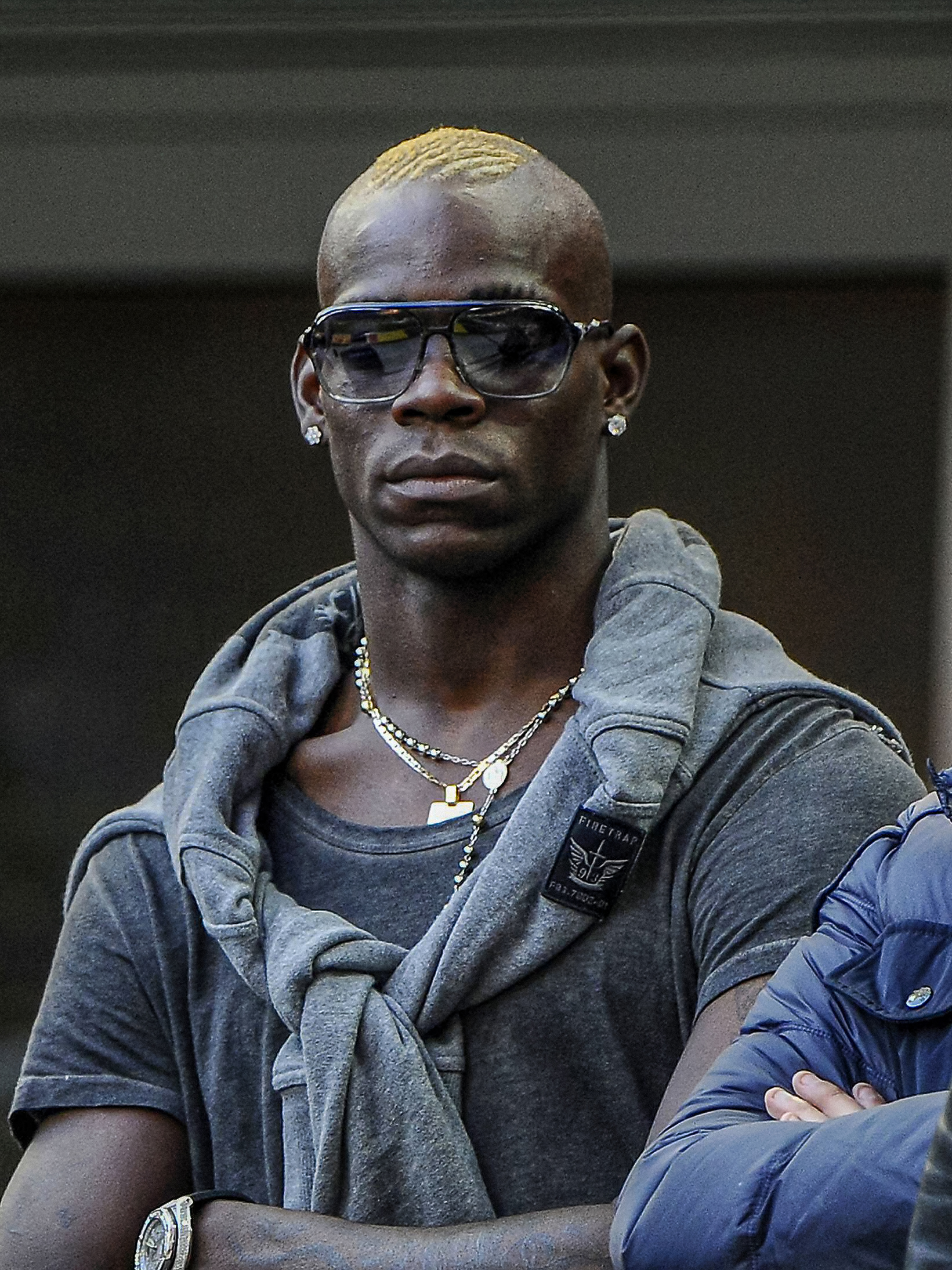
An early adopter of self-expression through fashion, Balotelli paved a lane for himself, dominating the discourse in the 2010s, with his expressive and distinctive style. From fur coats to drop-crotch pants, the Italian had his finger on the pulse. No doubt aided by his education in Milan, a global leader in the fashion industry.
Such was his impact, he was awarded a spot amongst the top five best dressed men in 2012 by GQ, and in 2015 they followed up with a feature, ‘Mario Balotelli: Most Stylish Man Alive.’
Arguably, Balotelli’s interest in fashion stemmed from his determination to reclaim the narrative surrounding him by presenting himself as he chose, rather than how others perceived him.
Born in Palermo to Ghanaian immigrant parents, he was placed into the foster care of the Balotelli family when he was just 3 years old. He subsequently gained Italian citizenship in 2008, when he turned 18, declaring, “I am Italian, I feel Italian.”
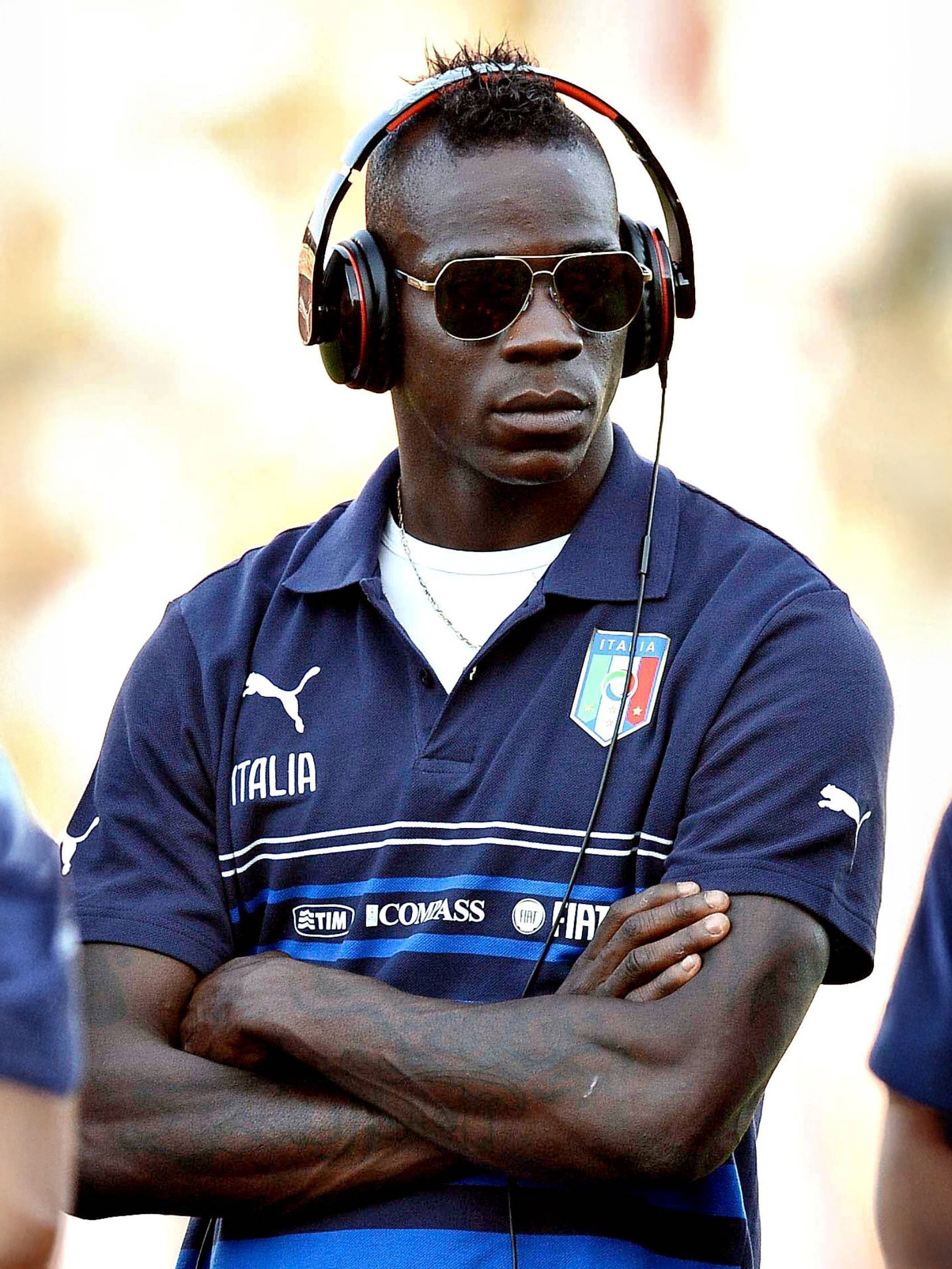
Unfortunately, despite his citizenship, Balotelli was often the target of racism during his time in Italy’s domestic league, such as in 2019 during his time at Brescia, when he was the target of monkey chants during a game against Verona.
Given the complexity of identity, one can only imagine the crisis of identity Balotelli has contended with throughout his life. A different childhood compared to his peers, not to mention the horrific racism targeted towards him during his various spells in Italy’s domestic league. So, it makes sense that he developed a strong interest in fashion, as it allowed him to reclaim his appearance and let him be himself.
Fast forward to today, and the Italian is still making his mark on the game. Back in June, the striker linked up with Corteiz as they announced a Mario Balotelli-inspired collection, and later that month, he made his Fashion Week runway debut in Paris for Kid Super. Closing a show titled “The Boy Who Jumped The Moon” is perhaps the most apt introduction to high fashion for a man who defied all the odds.
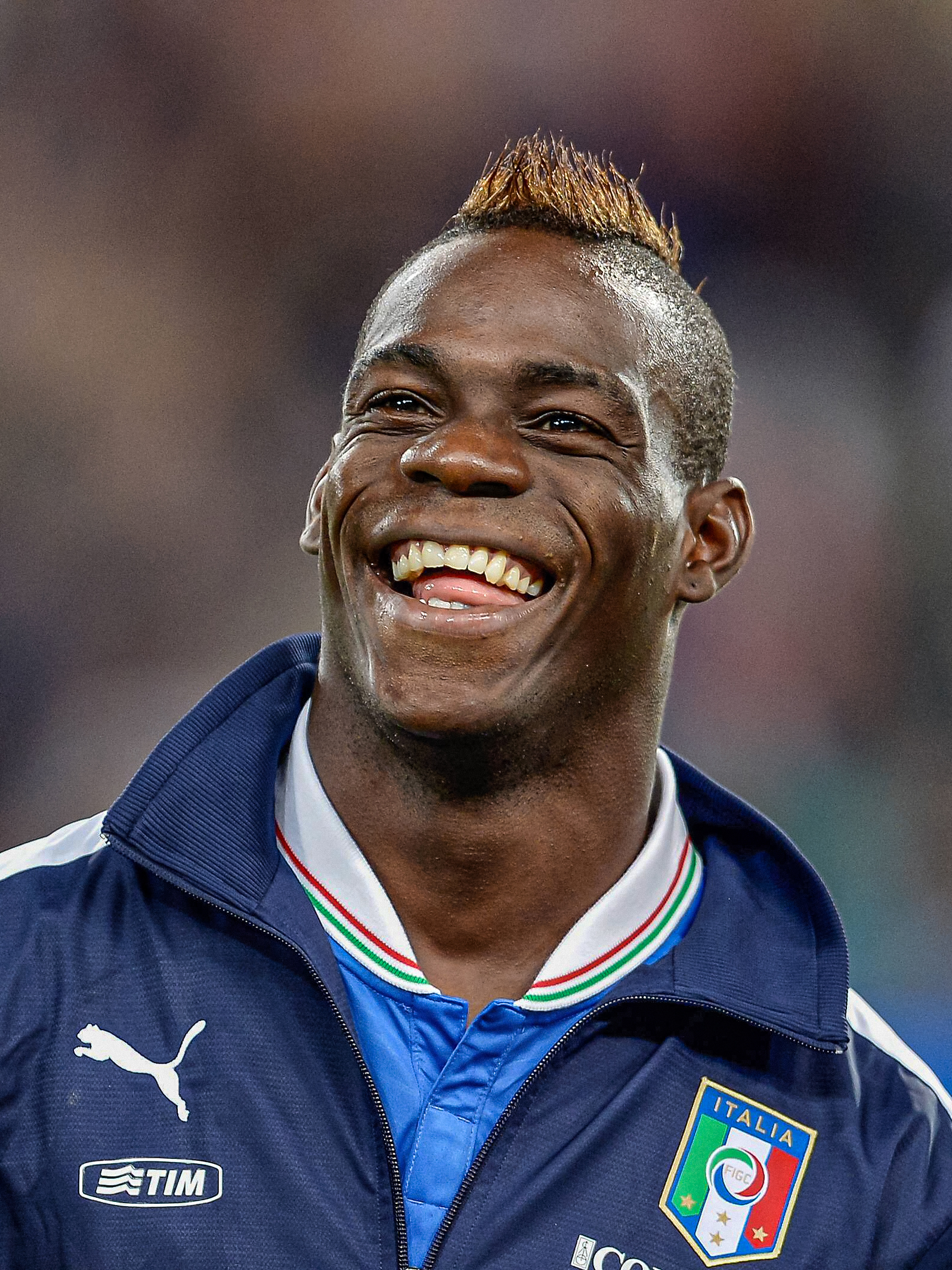
More than just making it, Balotelli played a pivotal role in changing the game as we know it today. The antithesis of the modern-day media-trained baller, he was unfiltered, divisive, but ultimately iconic.
Often reduced to a pantomime villain, Mario Balotelli was always the hero the game needed but didn’t deserve.
Grazie per tutto, Mario.

‘Surely with hardship comes ease’ – Surah Ash-Sharh (94:5-6)
They often say you are a product of your environment. But Oday Dabbagh is living proof that you can embrace the experience of different cultures while being a powerful representative of your nation. We sat down with the 26-year-old Palestinian striker to delve deeper into his journey so far, the importance of authentic representation, self-expression through different mediums, faith, and much more.
Oday Dabbagh rose to global acclaim during his recent loan spell at Aberdeen, making the move to Scotland in the January transfer window earlier this year. The move proved fruitful for the striker as he ended the season a champion, lifting the Scottish Cup. His form has since earned him a summer move to Egyptian powerhouse, Zamalek SC, swapping the Scottish Highlands for the Cairo sun.

(Jack Rowley)
Born and raised in the Old City in Jerusalem, Dabbagh reflects on his childhood with great fondness. “It was a beautiful childhood. Since I was young, I used to play football in the alleys of the old town, and my relationship with my family was wonderful. I will say, they cared more about studying than football, but we found a compromise in the end.” [laughs]
A keen footballer from the very beginning, Dabbagh was one of many Palestinian children playing football with their friends at any opportune moment. Given the nation’s passion for the game, I was curious to learn more about why football plays such a big role in Palestinian culture.
“I think globally, this sport is so important because it really brings people together – fans, teams, players, countries. For us, it gives our people an incredible sense of pride. But beyond that, sport is powerful because it’s a gateway to build bridges.”
For Oday Dabbagh, football was that bridge, allowing him to play the sport he loves professionally. Despite typical Arab familial expectations on pursuing education, which I’m sure many of us can relate to, Oday’s breakthrough into the professional game came while he was just a teenager.

(Hussein Mardini – 3XV Sports)
“It was a wonderful feeling. I was very motivated to show my abilities, and that experience was the start of everything for me. That launched me into the Palestine U-18 Youth National Team Championship. To be honest, I didn’t expect to reach that stage at the time. I think I’ve always focused on working hard in the moment rather than anticipating what could be or what could come next. That mindset probably reduced the pressure on me.”
Making his professional debut in the Palestinian domestic league for Hilal Al-Quds at 16, he then guided the club to three consecutive West Bank Premier League titles. And became the league’s top goalscorer in 2019, bagging 16 goals.
Staunchly determined to succeed, Oday’s domestic exploits meant the youngster was garnering attention across both Europe and the Middle East, with the then-20-year-old opting to make the move to Kuwait. In the face of European interest, one would assume that it would be the most desirable option, but once again Dabbagh displays the level-headedness that has held him in good stead thus far in his career.
“I chose Kuwait because it was my first professional experience, and I wanted to adapt in an Arab country first. It turned out to be a really good decision that prepared me for Europe later.”
View this post on Instagram
Despite the elation of securing his first professional contract abroad, Oday admits to having mixed feelings about leaving home. “My feelings were mixed… joy, sadness, and fear. But once you get on the plane, those feelings disappear because you know you’re going toward your goal and you have to achieve it. Of course, I missed my family and friends, and that was difficult. But I learned a lot, and it only strengthened my dedication to my dream.”
Since making the move to Kuwait, Oday has played in six different countries, and he can’t speak highly enough of the experiences he’s had, particularly the impact it has had on developing his style.
“I’m really happy I played in so many countries. I learned new cultures, met new people, and picked up different styles of football. It made me adaptable. With style, each place has its own identity, but you also get this mix of cultures from other players – music, fashion, food, language… That has shaped me a lot, on and off the pitch.”

(@IMAGO)
Thriving at club level, Oday’s most prolific achievements have come on the international stage. Representing Palestine, the striker has gone from strength to strength with the “Lions of Canaan,” becoming the nation’s all-time top scorer with 16 goals in 45 appearances. Not only is he putting the nation on his back on the pitch, but Oday is a proud ambassador of his Palestinian identity, as he doubles down on how important the role is to him.
“I believe that this did not come out of nowhere; it came as a result of continuous work and commitment. I am truly proud to be a representative of my country, and I certainly thank every person who supported me or helped me to reach this level. It is a great thing to be an ambassador for your country.”
But football isn’t the only medium through which the 26-year-old chooses to express himself. A self-proclaimed fashion head, Oday’s style is equally versatile and experimental. Perhaps that may come as no surprise, given the melting-pot of experiences he’s had playing in six different countries.

(Hussein Mardini – 3XV Sports)
Most importantly, Oday firmly believes in the power of fashion as a vehicle of self-expression and identity, “It’s very powerful. It gives us the space to be ourselves and to show the moments and experiences we’ve picked up along the way.”
Not only does he represent his identity through football and fashion, but his very name pays homage to the culture he holds most dear. Names possess significant meaning in Palestinian culture, and so with that in mind, I asked Oday what his name means, to which he said: “Adi is an old Arabic name that means ‘running’ or a ‘fast enemy.’ Quite ironic, when one considers his attributes on the field, with speed and tenacity key hallmarks of his game.
‘Surely with hardship comes ease’ – Surah Ash-Sharh (94:5-6)
A powerful verse from the Quran that serves as a reminder that every difficulty is accompanied with relief, and even in difficult situations, there are blessings and ease.
With hardship an inevitability in football, it is crucial to bounce back from tough situations, and I was keen to explore how Oday motivates himself during periods of difficulty in the game.
“I tell myself that I am here to achieve a goal, and I cannot give up. And that is how I overcome difficulties. I talk to myself and motivate myself every time. Then I have my family, faith, and a deeper dream to make a difference. I do want to inspire young players. And when I remind myself of all of these things, I never stop pushing forward.”

(Palestine National Team)
At just 26, Oday Dabbagh’s story is far from over; from making his mark domestically, to securing his first professional contract and leaving home at just 20, to now being the face of the franchise for his national team.
As he settles into the lively city of Cairo, surrounded by history, the forward has not once forgotten his roots. Motivated by his hardships, a determination to make his family proud, and fulfil his goals, Oday is fast “running” to the top as one of the most influential figures in the game, transcending the boundaries of football, fashion, and identity, not to mention the “fast enemy” being a constant thorn in the side of opposition defences.
After reflecting for the vast majority of this conversation, it seemed poignant to conclude by looking ahead, asking Oday what he would like his legacy to be.
“That I gave it my all on and off the pitch, and that I took that, and used it to make an impact for the next generation. And that next generation did the same.”
Forever selfless, Oday Dabbagh is an inspiration and a role model, determined to use his growing profile to embrace his identity and advocate against injustice. Dabbagh’s career thus far has been remarkable, but his story has just begun.

As he celebrates his 28th birthday, Marcus Rashford will no doubt be aiming to push on after his strong start to the season, racking up 11 goals and assists in just 11 starts. But while Rashy invariably looks forward, we decided to look back, paying homage to the work he’s done and the impact he’s had, especially off the pitch.
The Mancunian burst onto the scene back in 2016, introducing himself to the Old Trafford faithful with a brace in the Europa League against Midtjylland. That same week, Rashy bagged yet another brace, this time in the Premier League against Arsenal. Destined for greatness, the path hasn’t always been smooth, but one thing is for certain: Marcus Rashford is the voice of the streets.

More than a footballer, Rashford never forgets his roots. Not only did he force a government U-turn during the COVID pandemic over free school meals, but he has also built libraries in primary schools across the UK and consistently supported his former primary school in Wythenshawe. Not to mention linking up with Carl Anka to write inspirational books for children.
From books to the booth, it’s no secret Rashy rocks with Lil Baby – just look at the EFL Cup celebrations in 2023 with Jadon Sancho. MBE has also linked up with DBE, as well as fellow Mancuinian Meekz. After a tough few years, Rashford has been ‘DUE4AWIN’ for a while, and he’s running it back in style this season.

Coming a long way from matching fits with Jesse Lingard, Rashford knows how to put it on. But after making a stand for what’s right, and giving back to those less fortunate, a situation Rashford can personally relate to, the pendulum of favour shifted. Despite his positive contributions, his charitable work has often been weaponised against him, in response to normal fluctuations in form. As layering chains, and supporting the next generation of underprivileged children, became seemingly incompatible.
The backlash he faced after his trip to watch the New York Knicks last November, epitomises the intense scrutiny players face when simply expressing themselves, as most of the discourse challenged his professionalism and used his outfit as justification of said criticism.
First and foremost, Rashford looked fly as hell in his LV hoodie and chains, not to mention the dope gold grillz. But most importantly, why is it being used against him when he is entitled to rock whatever drip he wants to? The whole narrative in mainstream media around black footballers and black athletes in general when it comes to self-expression needs to be questioned.
There is a fine line between criticism and personal attacks, and it often feels as though the discourse is targeted at Marcus the person rather than Rashford the footballer.
Granted his form during the trip wasn’t the best but he would be the first to admit that. Ultimately, you can criticise his efficacy on the pitch, but a line must be drawn.
In a time of increased mental health awareness within football, the media must be held responsible for their persistent efforts to challenge his integrity as a human being. Rashford has made some mistakes, and he will likely continue to make them, but what individual in their twenties hasn’t? Whenever the media discusses Marcus Rashford, they mention his wages, cars, and clothes. Yet, there is complete silence when it comes to his positive work.
From 39, to 19, to 10, Rashford is on his way back to being number 1. Whether he’s backstage at DBE concerts or linking up with Prince William, Rashford has always been more than a footballer. A cultural icon for his playing style, philanthropy, and positive impact, it’s time we appreciated what he has achieved at a young age.
In the words of Marcus Rashford: “If you back me, good. If you doubt me, even better.”
Happy Birthday, Rashy.