
Features
Amadou Onana is living every day like it’s his last

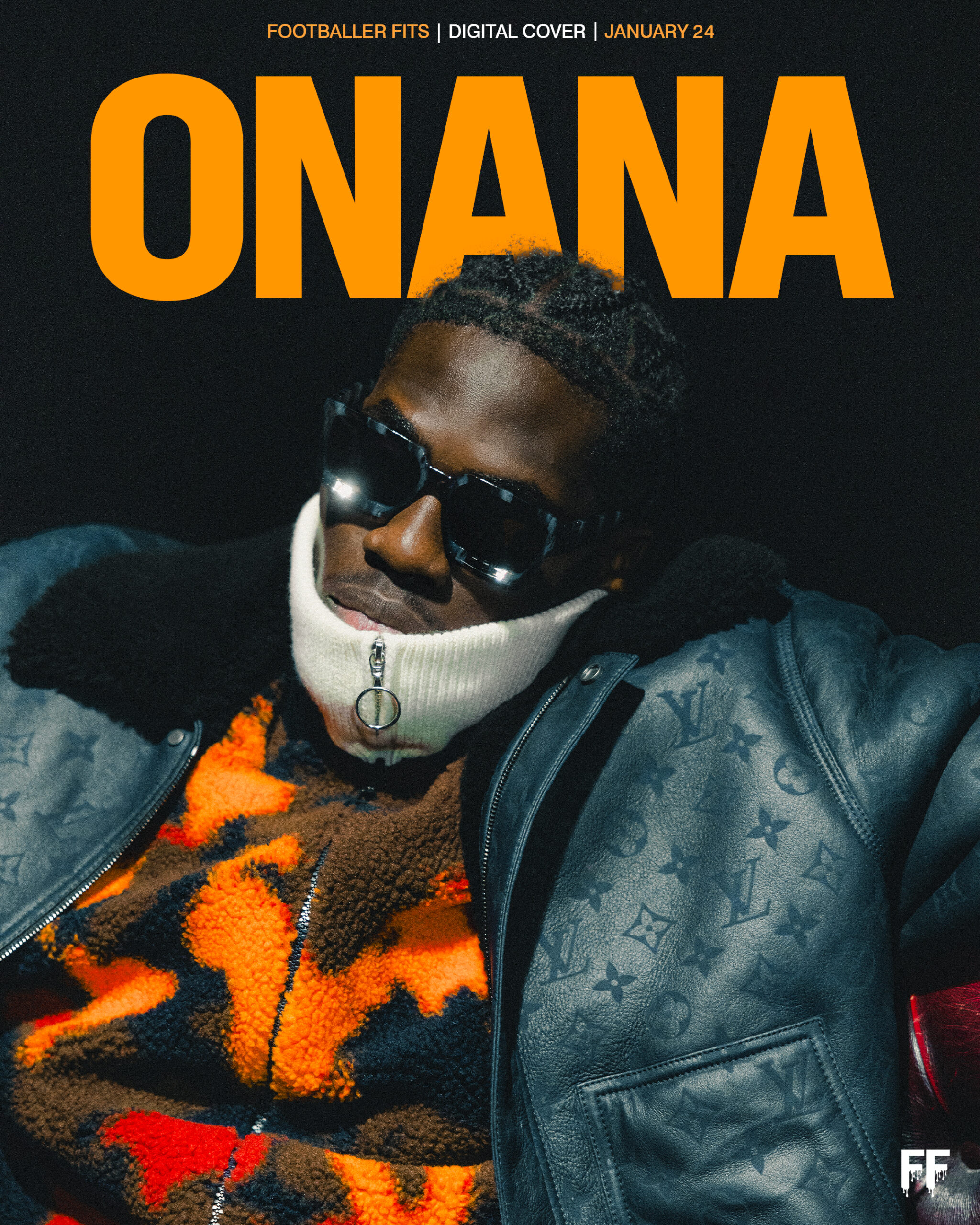
Amadou Onana lives every single day like it’s his last. Why? Because he knows it truly could be. “Tomorrow, everything could end,” he tells me in the aftermath of our first cover shoot of the year.
“It doesn’t matter how far you’ve made it in football or life, or who you are or where you’ve come from. It’s the same for everyone. Tomorrow, anything could end. You have to live life to the fullest and go after all of your goals.”
The Everton midfielder, who has already played professionally in multiple leagues across Europe before his 23rd birthday, speaks with the maturity and humility of a seasoned pro, though not without the enthusiasm for life of a new kid on the block with the world at his feet.
For Onana, every accomplishment in his short career so far has only been possible due to the sacrifices of the two strongest people in his life: his mother and sister.
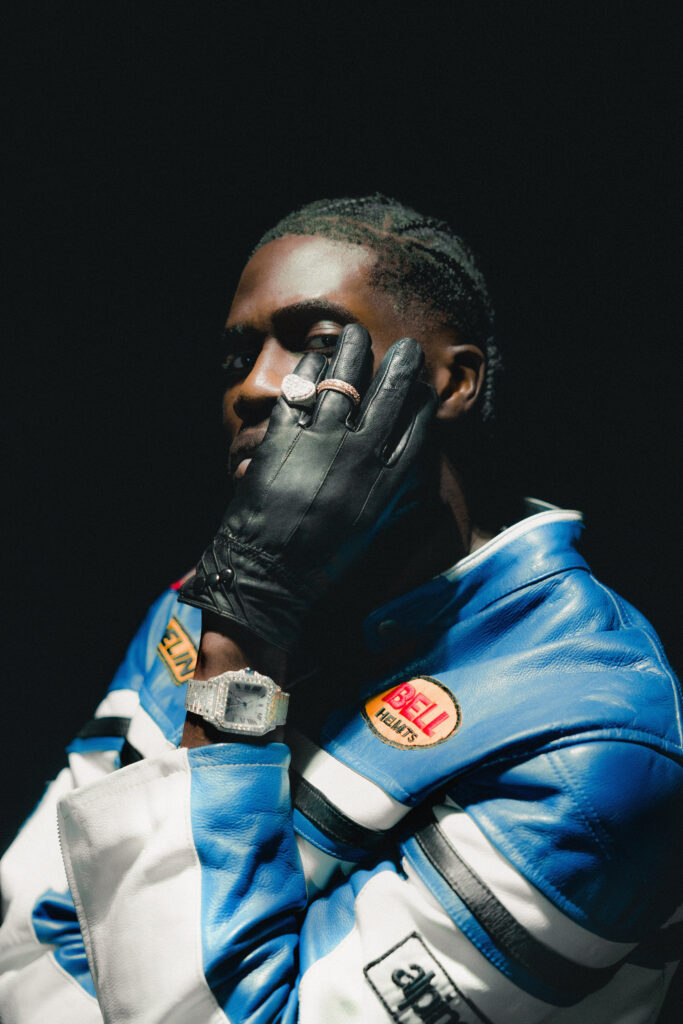
Photography by Shane Bain.
“They played a crucial role in my journey to making it as a professional,” he says. “My sister was battling cancer at the same time she helped me get a move to Hoffenheim. To this day, she is my agent. She takes care of everything in my life. Literally everything. From a personal trainer to a chef to a mental coach, whatever I need, she takes care of it. A big shoutout to my sis. She is one of the strongest human beings I know.”
“With my Mum, she did a lot,” Onana adds. “She’s my Queen. She gave up on her life and her dreams for me. She had her own business in Senegal as a physio and gave up on all of that to move to Belgium to make her child’s dream a reality. I could never say ‘thank you’ enough to my Mum.”
Born in Colobane of Dakar, Senegal, Onana’s early life – eleven years to be exact – was spent in West Africa under the roof of a 14-member household. Though originally from Cameroon, Onana’s father lived in Belgium, the place he would first meet Onana’s mother, and therefore Brussels provided the pathway to more opportunities to not only play football but to forge a professional career in the sport.
Despite Belgium’s contribution to his journey in football, Onana’s gratitude for his upbringing in Senegal has never wavered. “Growing up in both Senegal and Belgium gave me different views about life,” he says.
“They are two different countries with two very different cultures. Growing up in Senegal gave me the family values I have now. It humbled me. I’ve been around people who didn’t have much but they lived life with happiness and would help the next person, even when their situation wasn’t the best.”
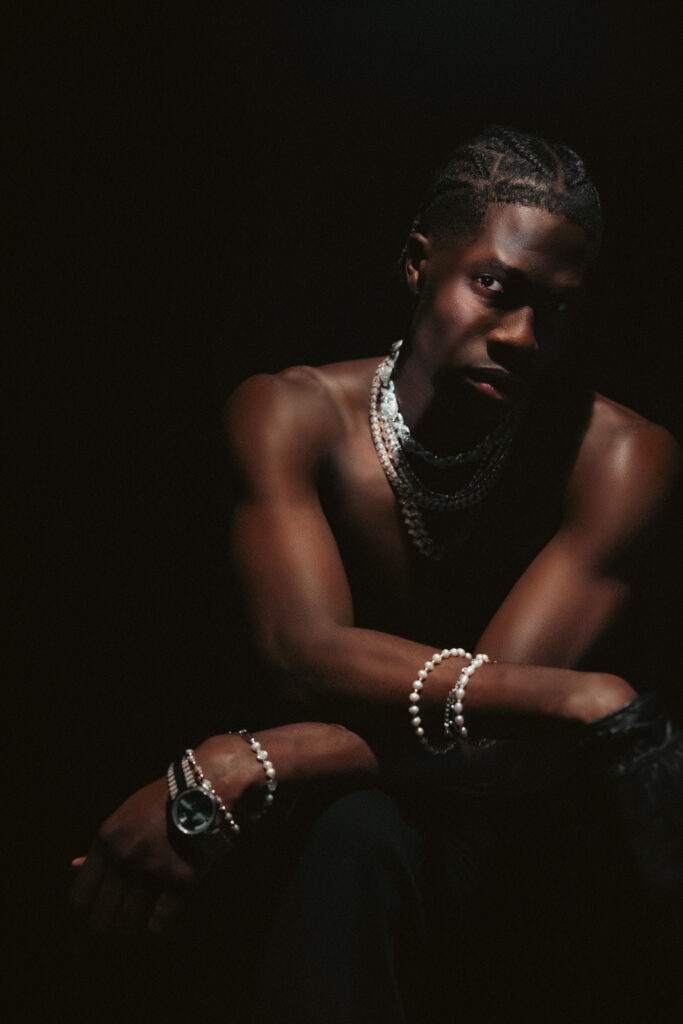
Photography by Shane Bain.
“With Belgium, I moved there when I was eleven as a young kid. I went to school there, I started my football career there and I think I learned the discipline to make it to the top level during my youth there.”
Onana, by his own admission, is a larger-than-life character. If you’re in a room with him, you will know about it. Not because of his 6’4″ frame, footballer fame or distinctive style choices, but the fearlessness he holds in his self-expression. From dancing to afrobeats to belting out Giveon’s ‘Heartbreak Anniversary’ on set, Onana is never afraid to be himself in any environment, something many athletes are progressively becoming more open to than ever before.
The Belgian believes his travels across the globe have helped shape the person and player he is today. “Growing up around the world was great for me,” he says. “It opened my eyes and my vision for life. I picked up something from every single place I’ve been.”
“In Senegal, I learned family values, creativity and the art of being yourself and doing your own thing. In Belgium, I learned about football, how the industry works and the business side of the game. Going to Germany, the German discipline is just different. You really have to follow the advice you’re given and the steps as they are to succeed.”
Now, England is Onana’s new home. Almost two years on from his switch to Everton from Ligue 1 side Lille, he is one of the Premier League’s hottest prospects with the character to match. Last January, he reportedly turned down interest from Chelsea, refusing to leave the Toffees in the midst of a relegation battle, a decision that would later help keep Everton’s Premier League status intact.
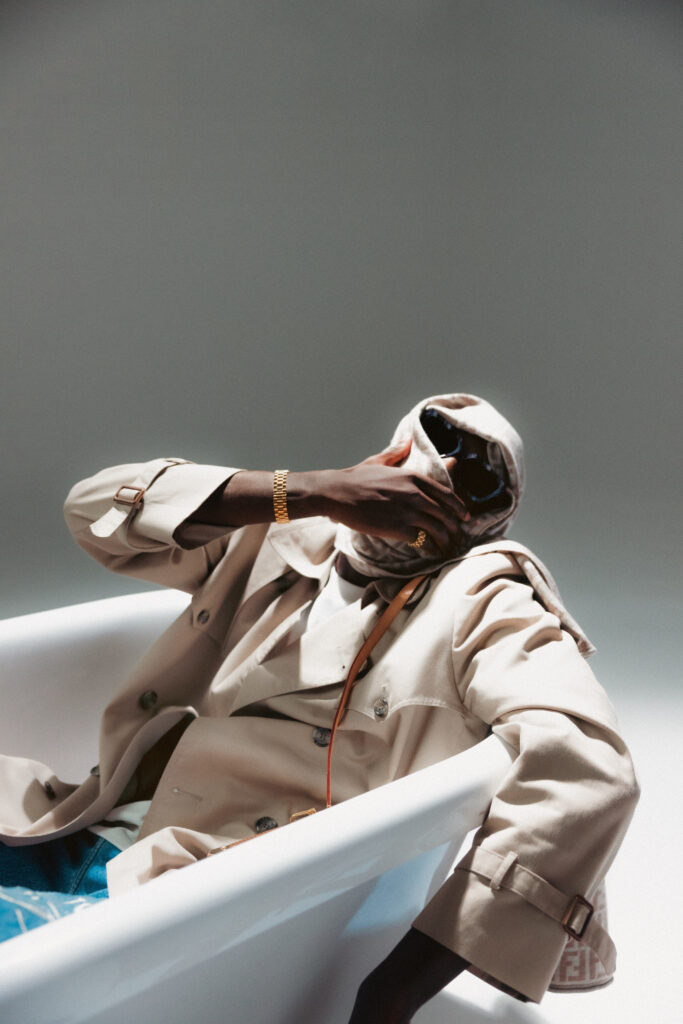
Photography by Shane Bain.
Fast forward to January of this year and once again, Onana’s name is attracting suitors. Reports of interest from both Manchester United and Arsenal are rife and Everton’s troubles with the Premier League continue, including a points deduction for allegedly breaching financial regulations. Despite this, Onana remains at Goodison Park, giving his all in every game as each Evertonian – on the pitch and in the stands – continues to do since the ruling.
“I feel very happy living in England, I’ve been accepted as I am,” he says.
“I’m a loud character and I’m quite different from other people. I think that’s normalised here, which is a great thing for me. In England, I feel like people are very open-minded. You’re accepted no matter who you are, what you come from, what religion you follow and you can be yourself.”
The importance of being yourself is something that regularly features in conversation with Onana. Whether it be from his time in Senegal or forging a career as a young player in the social media era, being unique and standing out from the crowd is a vital part of his life.
“To me, it’s very important. I can’t be anything else but myself,” he reveals.
“That’s how I’ve been raised. Being proud of who I am, what I do and where I came from. In the most humble way, there is no other human being on this planet that is exactly like me. Everyone has different characters and different views on life, so just be yourself, express yourself the way you want to and do things that you actually want to do.”
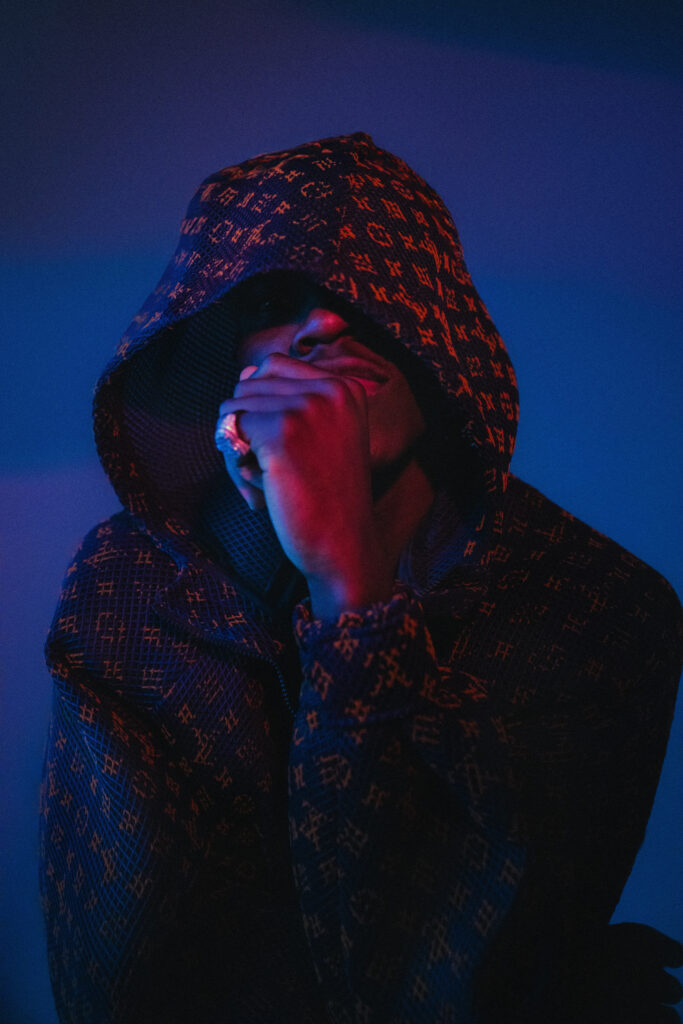
Photography by Shane Bain.
Away from football, fashion and music act as an outlet for Onana in his hunt for self-expression. If you aren’t aware of the rise of football x fashion in recent years, firstly, where have you been? Secondly, things are only getting bigger so you may need to catch up whilst you still can. Long gone are the days of athletes being required to stick to football. The new generation of players are leading a wave in which they have become the new age fashion icons and with the backing of the youth, their influence over football fans and Gen-Z consumers knows no bounds.
“Everything has evolved,” says Onana. “Back in the day, football players were just seen as football players. Now, people understand we can do a lot more than that. Football doesn’t define us. Football is not who I am, but what I do and what I love. I do loads of other stuff, like singing, modelling and fashion,” Onana reveals. “It makes me happy that everyone is opening up and showing a different side to themselves. I think it’s a great thing for the game.”
“I feel like fashion is a way of expressing myself and that’s the magic thing about it,” Onana explains, more than happy to continue diving into his fashion exploits. “You get to decide what you rock today. I express myself through the way I dress and I dress the way I feel.”
“If I wake up happy, you will see it in the way I dress with loads of colour combinations. If I’m a bit moody, I’ll go dark. It really depends on my mood and that’s what is so special about it. If I feel comfortable in it, I don’t mind wearing anything. I’ve done crazy styles before and as long as I find it fire, I’mma rock it.”
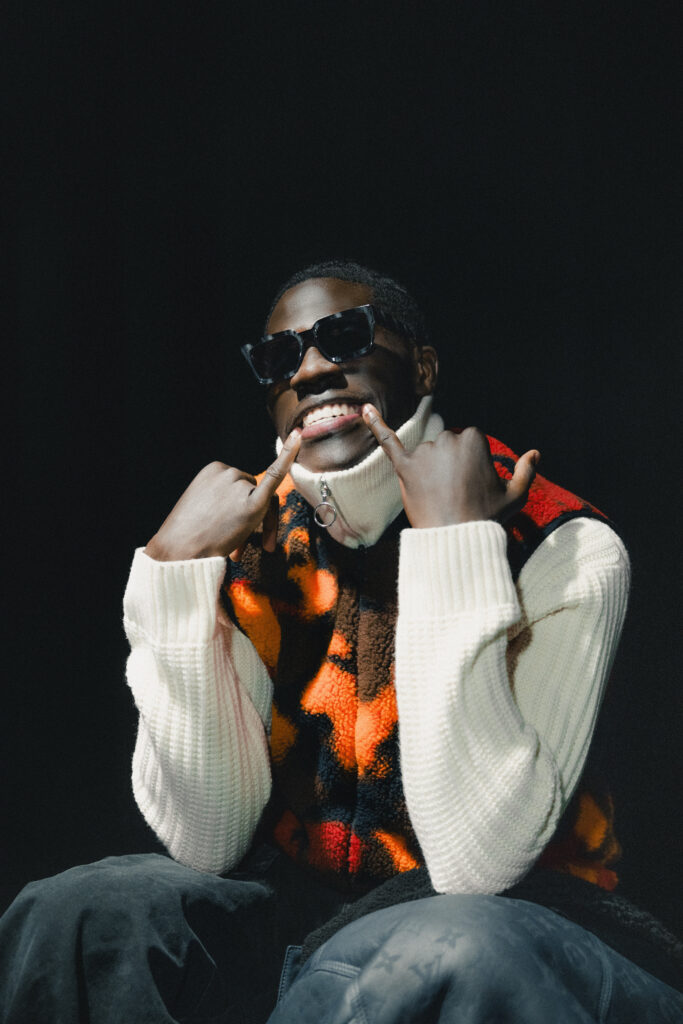
Photography by Shane Bain.
One thing about top-level athletes is that they are competitive by nature, in any and every field they play. When it comes to football and fashion, things are no different. As the niche continues to grow (a rise which saw training fits and pre-game looks introduced across club socials in Europe last season), so do the levels being displayed by each elite-level baller with a love of self-expression. Naturally, debates between players now go further than just on-the-pitch performances with wardrobe wars replacing everyday football discussions and players battling it out to be the best-dressed athletes in sport. Barcelona’s Jules Koundé and Aston Villa’s Kenza Dali were most recently crowned Footballer Fits’ 2023 MVPs, a prize given to the flyest footballers of the year.
For both club and country, Onana has shared dressing rooms with some of the waviest names in the football x fashion world, aside from his own of course. One baller in particular stands out when I quiz him on the best-dressed players he’s played alongside.
“Number one, Mr Michy Batshuayi. That guy is fly! That guy is cold!” Onana says without a second of hesitation.
“I like the way he dresses because it’s different from anyone else. He does his own thing and you can really see that. The way he dresses matches his personality, which I love.”
“Timothy Weah is another. I played with him back in Lille. He brings that American style and he’s one of the coldest I know. I also like Dominic Calvert-Lewin a lot too. Again, he expresses himself differently to most people. Jérémy Doku is a fly baller and he’s my guy! I play with him at Belgium and every time we come to meet up, it’s a competition, I’m not going to lie! People are always trying to look the best and I like it. I could name even more, but I feel like these guys are the flyest I’ve played with.”
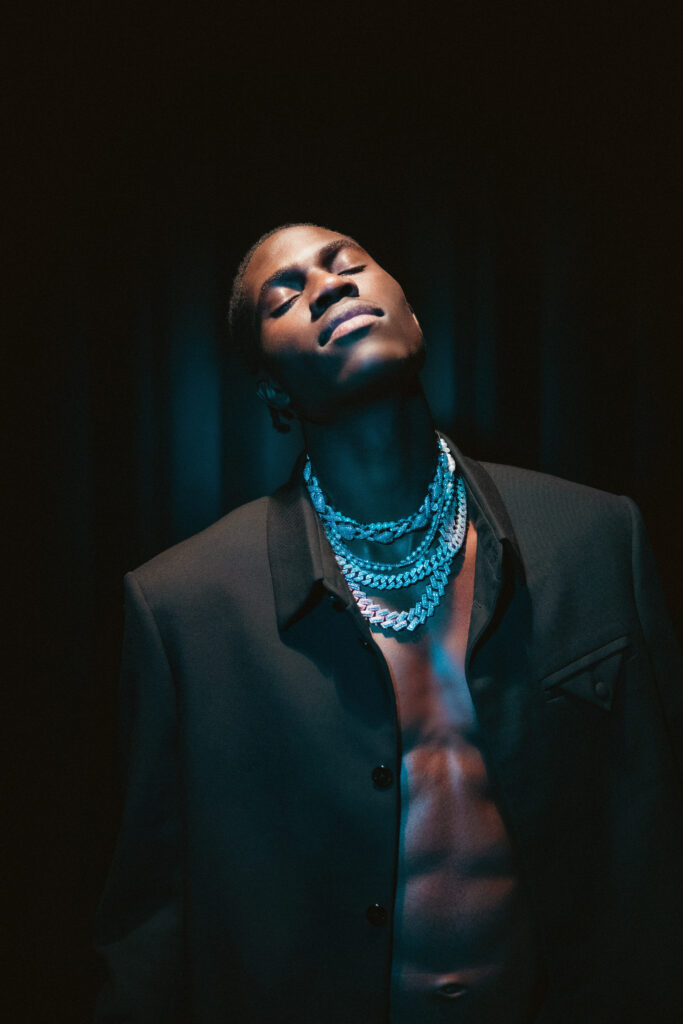
Photography by Shane Bain.
Whilst the endless supply of inspiration from other players may be of use to many, Onana’s inspiration comes from far greater means than the Instagram feeds of his peers. “I feel like I inspire myself from everything I see. I look at other athletes, artists, models or my experience travelling the world and coming from Senegal, where people dress in a very loud and colourful way,” he says.
“Then I can go across the globe to America and look at the NFL players for example. I feel like I can dress in any kind of way, I can dress young, I can dress classy and elegant, I can dress crazy and colourful and do it all, rock n’ roll. I don’t really focus on brands. For me, as I said, if it looks good, I don’t care about anything else. I really look at everyone around me for inspiration but then try to do my own thing.”
Fashion is no longer the only route of self-expression players are exploring outside of the game, though. The new-found trend of footballers launching music careers is becoming harder to ignore with each passing day. AC Milan’s Rafael Leão goes by the pseudonym ‘Way 45′ to release his music, Juventus’ Moise Kean recently released his debut track under the group ’19F’ and Memphis Depay has been dropping heat across all streaming platforms in recent years.
Onana’s musical ability is no secret either. From singing videos on his own channels – including his viral cover of Summer Walker’s ‘Session 32’ – to his ability to rap in multiple languages on the same track, the midfielder sees music as another form of expressiveness that football nor fashion can offer. “With music, I can put everything into words,” he says.
“I’m expressing myself with my voice and I can shout about how I feel. It’s different and expressing myself in a way that everyone can understand in comparison to football and fashion.”
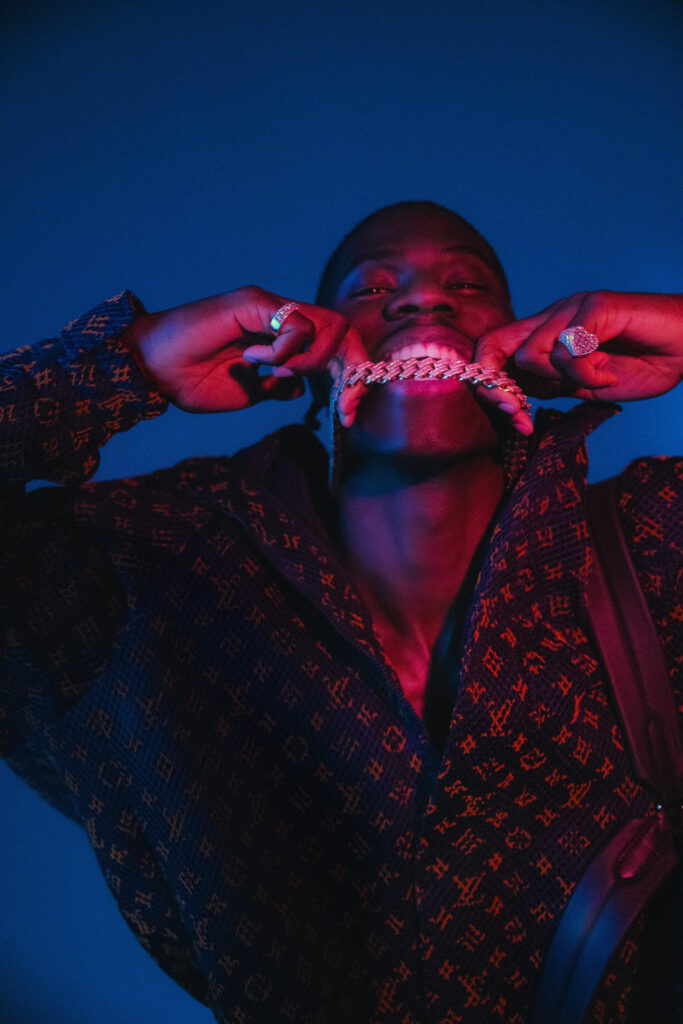
Photography by Shane Bain.
Onana is not just jumping on a popular trend either, as his family will attest to. Since early, music has been a part of his life.
“My love for music started young, you know. I’ve always loved listening to music, singing in the house and in the shower so loud that my Mum would bang the door! I started writing my own tracks since I was young too,” he reveals.
“Ten, eleven-years-old, writing little rap songs and that. I never released them and never will because those songs were crap! Nah, I’m just joking, but those songs were very different to the ones I create now. I released the track with you guys and my guy #17 (Alex Iwobi), which was a great track too by the way and I’m planning on releasing more in the future. It’s something that’s really fun for me.”
The process of those tracks can start and end anywhere for Onana. Though many musical talents like to lock in during their time at the studio, Onana, like his fashion sense, sources inspiration from all over. “I feel like I could start writing anywhere,” he says, taking me through his creative process.
“I could be on the coach to an away game and a bar will come in my head. Sometimes I see something and I’m able to write about it there and then. There’s no special place or routine. I just need a beat, my creativity and inspiration and that’s it. I can write from anywhere at any time.”
As things stand, the footballer music scene is yet to have as many participants as the fashion wave, but it continues to grow. Draping yourself in designer clothes and the latest fashion trends across social media is a little easier than being born with musical ability, it must be said. Despite the vast improvement of criticism against players for their outside interests, making and releasing music still has some way to go before it’s fully accepted in the sport. Because of this, some players with genuine talent have kept it far from the eyes and ears of football folklore and traditional media, something Onana wants to change.
“There are some very talented ballers out there who are probably scared to release something because of those who say ‘focus on football’. Of course, football is the main part of my life but it’s what I do, it’s not what I am,” Onana says passionately.
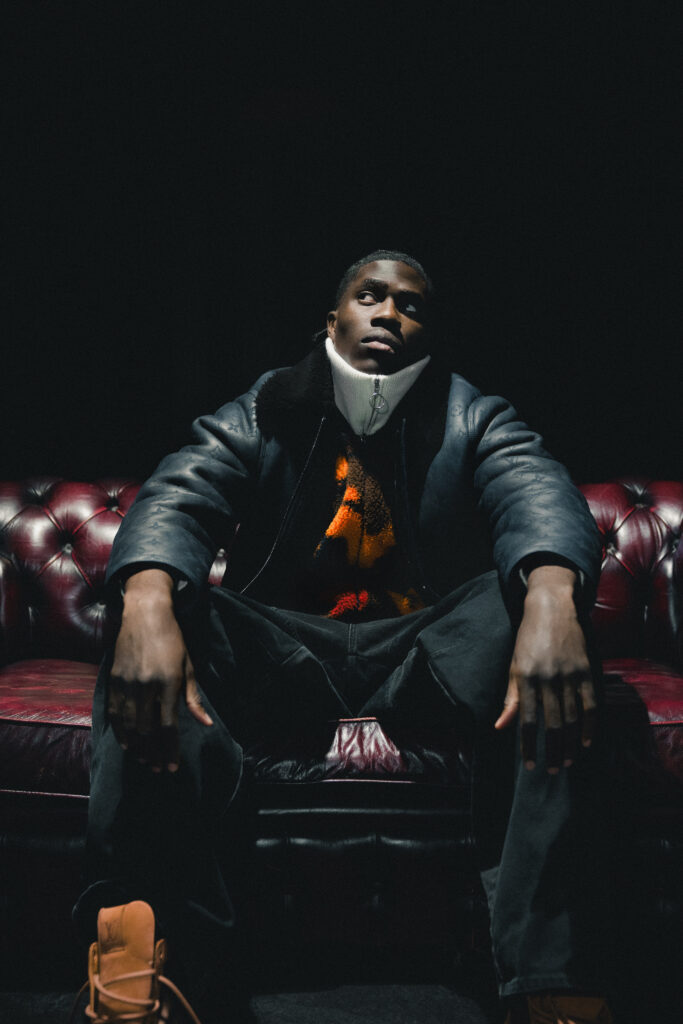
Photography by Shane Bain.
“Football is the most important thing so I’m focused on it but I need other interests and to think about different things when I’m away from the pitch. I think that’s more healthy. The ballers out there with talent, go out there and do your thing. Believe in yourself and just drop it, man. If you enjoy it, do it. We have to thank the likes of Memphis Depay who started the wave, so a big shout out to him and the other players that created a pathway for us to express ourselves.”
Spending time with Onana, it is incredibly hard to believe he is still just 22-years-old. From his understanding of life to his humble nature with everything he says and does, you would be forgiven for thinking he had already been there and done it all. A born leader who is focused on using his voice and his platform to inspire those around him and help those who need it most, Onana strays far from the stereotypes given to footballers.
Whilst becoming the best player he can be is a huge ambition and one he will give everything to reach, he understands life does not revolve around eleven people kicking a ball every Saturday, even when we football supporters feel that it does. Instead, leaving a legacy beyond the walls of a football stadium is at the forefront of his mind.
“I want to break records, I want to win as many trophies as I can, I want to push the barriers and play as many games as I can. I want people to remember me as the football player I am.”
“But more importantly, I want people to remember the person I am. To remember the people I inspired and the charity work I’ve done. I want to help as many people as I can, donate as much as I can and do as much as I can for my people.”
“At the end of the day, that’s what really matters to me, man. Football is great, but there’s a life after it. I want to be remembered for way, way more than just football.”
Producer: Jordan Clarke
Executive Producer: Kieran Clarke
Photography: Shane Bain
Video: Cory Shillingford-Cox
BTS Video: Ellie Wickes
Styling/Creative Direction: Marcus Pancho
Make-up: Corrine Gibbons
Lighting: Aaron Price
Retouching: Adam Lupton
Cover Design: Scott Mcroy
Jewellery: Local Kettle Brothers


‘Surely with hardship comes ease’ – Surah Ash-Sharh (94:5-6)
They often say you are a product of your environment. But Oday Dabbagh is living proof that you can embrace the experience of different cultures while being a powerful representative of your nation. We sat down with the 26-year-old Palestinian striker to delve deeper into his journey so far, the importance of authentic representation, self-expression through different mediums, faith, and much more.
Oday Dabbagh rose to global acclaim during his recent loan spell at Aberdeen, making the move to Scotland in the January transfer window earlier this year. The move proved fruitful for the striker as he ended the season a champion, lifting the Scottish Cup. His form has since earned him a summer move to Egyptian powerhouse, Zamalek SC, swapping the Scottish Highlands for the Cairo sun.

(Jack Rowley)
Born and raised in the Old City in Jerusalem, Dabbagh reflects on his childhood with great fondness. “It was a beautiful childhood. Since I was young, I used to play football in the alleys of the old town, and my relationship with my family was wonderful. I will say, they cared more about studying than football, but we found a compromise in the end.” [laughs]
A keen footballer from the very beginning, Dabbagh was one of many Palestinian children playing football with their friends at any opportune moment. Given the nation’s passion for the game, I was curious to learn more about why football plays such a big role in Palestinian culture.
“I think globally, this sport is so important because it really brings people together – fans, teams, players, countries. For us, it gives our people an incredible sense of pride. But beyond that, sport is powerful because it’s a gateway to build bridges.”
For Oday Dabbagh, football was that bridge, allowing him to play the sport he loves professionally. Despite typical Arab familial expectations on pursuing education, which I’m sure many of us can relate to, Oday’s breakthrough into the professional game came while he was just a teenager.

(Hussein Mardini – 3XV Sports)
“It was a wonderful feeling. I was very motivated to show my abilities, and that experience was the start of everything for me. That launched me into the Palestine U-18 Youth National Team Championship. To be honest, I didn’t expect to reach that stage at the time. I think I’ve always focused on working hard in the moment rather than anticipating what could be or what could come next. That mindset probably reduced the pressure on me.”
Making his professional debut in the Palestinian domestic league for Hilal Al-Quds at 16, he then guided the club to three consecutive West Bank Premier League titles. And became the league’s top goalscorer in 2019, bagging 16 goals.
Staunchly determined to succeed, Oday’s domestic exploits meant the youngster was garnering attention across both Europe and the Middle East, with the then-20-year-old opting to make the move to Kuwait. In the face of European interest, one would assume that it would be the most desirable option, but once again Dabbagh displays the level-headedness that has held him in good stead thus far in his career.
“I chose Kuwait because it was my first professional experience, and I wanted to adapt in an Arab country first. It turned out to be a really good decision that prepared me for Europe later.”
View this post on Instagram
Despite the elation of securing his first professional contract abroad, Oday admits to having mixed feelings about leaving home. “My feelings were mixed… joy, sadness, and fear. But once you get on the plane, those feelings disappear because you know you’re going toward your goal and you have to achieve it. Of course, I missed my family and friends, and that was difficult. But I learned a lot, and it only strengthened my dedication to my dream.”
Since making the move to Kuwait, Oday has played in six different countries, and he can’t speak highly enough of the experiences he’s had, particularly the impact it has had on developing his style.
“I’m really happy I played in so many countries. I learned new cultures, met new people, and picked up different styles of football. It made me adaptable. With style, each place has its own identity, but you also get this mix of cultures from other players – music, fashion, food, language… That has shaped me a lot, on and off the pitch.”

(@IMAGO)
Thriving at club level, Oday’s most prolific achievements have come on the international stage. Representing Palestine, the striker has gone from strength to strength with the “Lions of Canaan,” becoming the nation’s all-time top scorer with 16 goals in 45 appearances. Not only is he putting the nation on his back on the pitch, but Oday is a proud ambassador of his Palestinian identity, as he doubles down on how important the role is to him.
“I believe that this did not come out of nowhere; it came as a result of continuous work and commitment. I am truly proud to be a representative of my country, and I certainly thank every person who supported me or helped me to reach this level. It is a great thing to be an ambassador for your country.”
But football isn’t the only medium through which the 26-year-old chooses to express himself. A self-proclaimed fashion head, Oday’s style is equally versatile and experimental. Perhaps that may come as no surprise, given the melting-pot of experiences he’s had playing in six different countries.

(Hussein Mardini – 3XV Sports)
Most importantly, Oday firmly believes in the power of fashion as a vehicle of self-expression and identity, “It’s very powerful. It gives us the space to be ourselves and to show the moments and experiences we’ve picked up along the way.”
Not only does he represent his identity through football and fashion, but his very name pays homage to the culture he holds most dear. Names possess significant meaning in Palestinian culture, and so with that in mind, I asked Oday what his name means, to which he said: “Adi is an old Arabic name that means ‘running’ or a ‘fast enemy.’ Quite ironic, when one considers his attributes on the field, with speed and tenacity key hallmarks of his game.
‘Surely with hardship comes ease’ – Surah Ash-Sharh (94:5-6)
A powerful verse from the Quran that serves as a reminder that every difficulty is accompanied with relief, and even in difficult situations, there are blessings and ease.
With hardship an inevitability in football, it is crucial to bounce back from tough situations, and I was keen to explore how Oday motivates himself during periods of difficulty in the game.
“I tell myself that I am here to achieve a goal, and I cannot give up. And that is how I overcome difficulties. I talk to myself and motivate myself every time. Then I have my family, faith, and a deeper dream to make a difference. I do want to inspire young players. And when I remind myself of all of these things, I never stop pushing forward.”

(Palestine National Team)
At just 26, Oday Dabbagh’s story is far from over; from making his mark domestically, to securing his first professional contract and leaving home at just 20, to now being the face of the franchise for his national team.
As he settles into the lively city of Cairo, surrounded by history, the forward has not once forgotten his roots. Motivated by his hardships, a determination to make his family proud, and fulfil his goals, Oday is fast “running” to the top as one of the most influential figures in the game, transcending the boundaries of football, fashion, and identity, not to mention the “fast enemy” being a constant thorn in the side of opposition defences.
After reflecting for the vast majority of this conversation, it seemed poignant to conclude by looking ahead, asking Oday what he would like his legacy to be.
“That I gave it my all on and off the pitch, and that I took that, and used it to make an impact for the next generation. And that next generation did the same.”
Forever selfless, Oday Dabbagh is an inspiration and a role model, determined to use his growing profile to embrace his identity and advocate against injustice. Dabbagh’s career thus far has been remarkable, but his story has just begun.

As he celebrates his 28th birthday, Marcus Rashford will no doubt be aiming to push on after his strong start to the season, racking up 11 goals and assists in just 11 starts. But while Rashy invariably looks forward, we decided to look back, paying homage to the work he’s done and the impact he’s had, especially off the pitch.
The Mancunian burst onto the scene back in 2016, introducing himself to the Old Trafford faithful with a brace in the Europa League against Midtjylland. That same week, Rashy bagged yet another brace, this time in the Premier League against Arsenal. Destined for greatness, the path hasn’t always been smooth, but one thing is for certain: Marcus Rashford is the voice of the streets.

More than a footballer, Rashford never forgets his roots. Not only did he force a government U-turn during the COVID pandemic over free school meals, but he has also built libraries in primary schools across the UK and consistently supported his former primary school in Wythenshawe. Not to mention linking up with Carl Anka to write inspirational books for children.
From books to the booth, it’s no secret Rashy rocks with Lil Baby – just look at the EFL Cup celebrations in 2023 with Jadon Sancho. MBE has also linked up with DBE, as well as fellow Mancuinian Meekz. After a tough few years, Rashford has been ‘DUE4AWIN’ for a while, and he’s running it back in style this season.

Coming a long way from matching fits with Jesse Lingard, Rashford knows how to put it on. But after making a stand for what’s right, and giving back to those less fortunate, a situation Rashford can personally relate to, the pendulum of favour shifted. Despite his positive contributions, his charitable work has often been weaponised against him, in response to normal fluctuations in form. As layering chains, and supporting the next generation of underprivileged children, became seemingly incompatible.
The backlash he faced after his trip to watch the New York Knicks last November, epitomises the intense scrutiny players face when simply expressing themselves, as most of the discourse challenged his professionalism and used his outfit as justification of said criticism.
First and foremost, Rashford looked fly as hell in his LV hoodie and chains, not to mention the dope gold grillz. But most importantly, why is it being used against him when he is entitled to rock whatever drip he wants to? The whole narrative in mainstream media around black footballers and black athletes in general when it comes to self-expression needs to be questioned.
There is a fine line between criticism and personal attacks, and it often feels as though the discourse is targeted at Marcus the person rather than Rashford the footballer.
Granted his form during the trip wasn’t the best but he would be the first to admit that. Ultimately, you can criticise his efficacy on the pitch, but a line must be drawn.
In a time of increased mental health awareness within football, the media must be held responsible for their persistent efforts to challenge his integrity as a human being. Rashford has made some mistakes, and he will likely continue to make them, but what individual in their twenties hasn’t? Whenever the media discusses Marcus Rashford, they mention his wages, cars, and clothes. Yet, there is complete silence when it comes to his positive work.
From 39, to 19, to 10, Rashford is on his way back to being number 1. Whether he’s backstage at DBE concerts or linking up with Prince William, Rashford has always been more than a footballer. A cultural icon for his playing style, philanthropy, and positive impact, it’s time we appreciated what he has achieved at a young age.
In the words of Marcus Rashford: “If you back me, good. If you doubt me, even better.”
Happy Birthday, Rashy.