
Interviews
Manuel Akanji Opens Up On Love Of Afrobeats And Names Favourite Artists

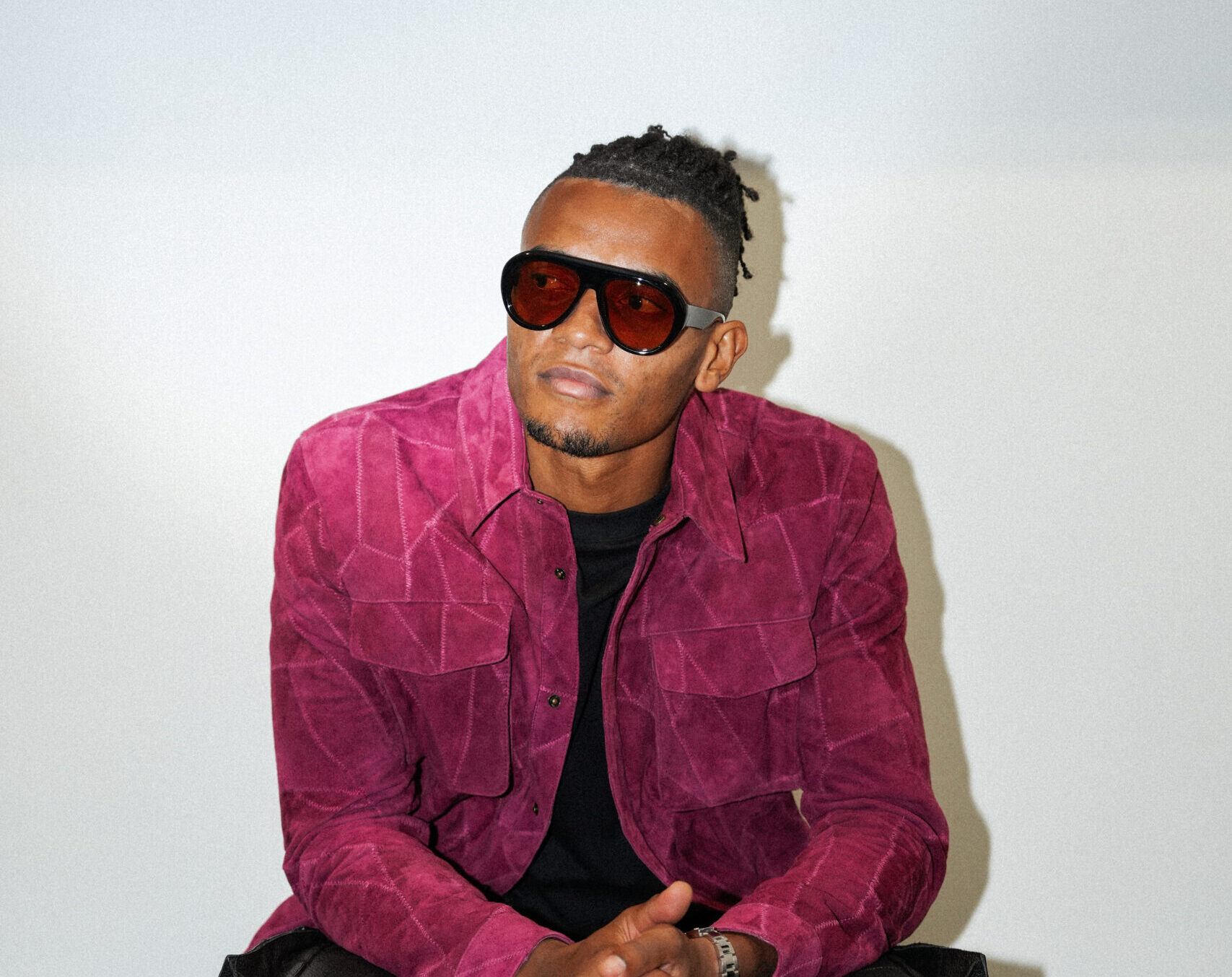
Alexa, play ‘Man of the Year’ by ScHoolboy Q, because this baller has won the moment already just 13 days into 2025. Our January cover star didn’t shy away from putting us on to his favourite artists when we headed to the Etihad Campus to chat all things fashion, AfroBeats and the album of 2024 with Pep Guardiola’s trusty centre-back.
Take notes people, these ones need to be added to the playlist immediately.
Akanji has been long been a fan of AfroBeats, often sharing his love of Nigerian artist Burna Boy.
“Burna Boy, Asake and Omah Lay,” he said when asked to name his top artists.
It was almost an instant reply from the Swiss defender, who went on to explain his musical taste further.
“When I was young, I listened to a lot of rap and hip-hop. Now, I still do but I mostly listen to Afrobeats. I’m always playing Lonely at the Top from Asake. There were some good songs on the new Asake album, but I wouldn’t say it’s my favourite.
“My favourite of 2024 was One of Wun by Gunna, it was really good.”
With so many footballers now killing it in the world of music, we’re looking at you Alex Iwobi, you may be wondering what an Akanji album would sound like.
If you hadn’t guessed already, he’d be making AfroBeat music if he hopped in the booth.
“I feel like you can listen to it all the time,” he explained. “That’s why I also don’t listen to as much rap and hip-hop anymore. I do before a match, but I feel like with AfroBeats you’ve got everything. I could put it on every day in the car or at home, even with my kids.”
Okay Akanji, you’ve put us on. About to go and make an AfroBeats playlist to last the whole of 2025.




As Erling Haaland continues to fight the robot allegations one Snap at a time, not to mention the infamous Snapchat Derby between Nottingham Forest and Fulham, it is clear that Snapchat has become a favourite amongst athletes.
Having previously explored how footballers are rewriting the rules of sports media, we wanted to delve deeper into Snapchat’s growing prominence in the sports industry, and who better than Julie Bogaert. As Head of Creator Partnerships EMEA at Snapchat, she is responsible for onboarding Haaland among many other athletes to the platform.
In this exclusive interview, we discussed the cultural shift online, the Snapchat boom amongst athletes, and how Snapchat is looking to establish itself as the go-to platform for authentic content.
What is your role at Snapchat?
Julie B: “I’m currently the head of EMEA creator partnerships at Snapchat, which means that my team and I look after any person of influence on the app. We want our community of creators to feel safe and understand how to use Snapchat so that they can build a strong community of people they engage with and ultimately make money from it. I think it’s very important to reward creativity and the time our creators spend on the platform sharing great content.”
What do you believe is the key driver behind the massive cultural shift online, from curated and refined posts to more authentic and in-the-moment?
Julie B: “I think Gen Z audiences are a lot more savvy – it takes a lot more for them to truly engage with content they see online. They want the real stuff – content that feels true to them and is authentic. The idea of seeing content that’s perfect and curated, talking about money, brand deals, and five-star hotels, is almost obnoxious in this day and age. Given the expectations of audiences today, it means that creators need to refine how they show up online – it should feel authentic, relatable and real.”
View this post on Instagram
Onboarding Erling Haaland – How did that occur, and how encouraging has his expressive progression been since joining Snap?
Julie B: “What I love about Erling is that he’s the perfect example of someone who understands that he needs to show up as his true, authentic self, so he took a chance to be on Snapchat to be as real as it gets. Erling has always been a fan of Snapchat – he mentioned this when I onboarded him. He’s Norwegian, and in Norway, Snapchat is huge – the app reaches over 90% of 13-24 year olds. People use it to communicate with their closest friends and family every day. Erling previously used Snapchat in his private life with a close group of friends and family before he decided to create a verified, public profile. He wanted to try it to see if people would be interested in his content. And very quickly, by not taking himself seriously he started using Augmented Reality lenses when he was a bit bored – like turning himself bald and interacting with his community using the Q&A function on Snapchat. The more he loved using the app, the more he posted, and the more he posted, the more people wanted to engage with his content. When he started posting regularly, I was like, wow, this dude is actually hilarious. This is the type of content I’m seeing more of – people are no longer scared to show who they really are, because on the other side of the phone, that’s what audiences are craving to see.”
What is behind the recent boom in Snapchat amongst athletes?
Julie B: “As you mentioned in the article that you previously published, the narrative is always super controlled by all the actors in the sport ecosystem. When athletes have so many people trying to control what they can say, it’s very difficult for them to feel like it’s fun. When athletes develop a verified, Snapchat public profile, they can be their true selves and show a side to their personality that’s beyond the pitch. Snapchat is built differently to traditional social media platforms – people come to the app to chat with their closest friends and family and then stay to watch all this great content. We don’t have an unvetted feed of content, it feels more playful and less pressure. I think it’s perhaps the last place where athletes can have a good time from a social media perspective.”
How should athletes best approach Snapchat, and what advice would you give to anyone looking to join the platform?
Julie B: “When I onboard athletes or any creator, I always tell them to think about three things they like doing and post about it. Not because they have to, but it’s a way for them to start thinking about what they could post. They often love fashion, their fits, travel and hanging out with friends – these are some of the common content pillars that athletes often bring up. For example, an athlete might say – I’m going to this fashion show, or I’m going to Monaco, and I’m going to have fun there with my boys where I will post a few pictures to show what I’m up to. Once they’re used to posting, they begin to share more behind-the-scenes style content from their lives. Something I really enjoy seeing, especially in the content from these athletes, is how they tag each other to encourage interaction. They love to annoy one another, and we’ve seen this in the UK with the Snapchat Derby (Fulham’s Alex Iwobi vs Nottingham Forest’s Ola Aina). I’ve also noticed that when some players are watching matches from other teams, they’ll tag other players to give them strength or send them good vibes. I think it’s also humanising something that many people just see as a very big, multi-billion-dollar industry. I like the fact that they humanise it and show that they have emotions, they share jokes, have fun, and we see that our audiences respond positively to this content.”
How is Snapchat looking to enrich the relationship between athletes and their communities?
Julie B: “It’s something we’re thinking about right now, especially in the lead-up to the World Cup. We’re trying to onboard different people within the sports ecosystem. Of course, the athletes are always going to be the most important, because they make up a large part of the sports ecosystem. However, we’re also going to onboard more journalists, coaches, agents, and their families because they will bring a different perspective to our community. For the World Cup, we want to have all of these people posting on Snapchat so that you don’t just have this one view of the World Cup, but you can see it through so many different lenses – that’s the power of Snapchat.”
Where do you see the relationship between athletes and Snapchat going in the next five to 10 years?
Julie B: “What I’d love to see, and it’s certainly what we’re working towards, is having athletes on Snapchat at the start of their career so Snapchat is first of mind. It’s no longer nice to have, but instead, it’s where they can really be themselves and connect with their community.”
How is Snapchat looking to establish itself as the go-to platform for the most authentic content?
Julie B: “I think it’s about providing more tools, more formats, and more choices for a diverse group of creators. Some creators prefer going live, so we’ve been thinking about a live product – as our CEO announced in September 2025. Some people will always love Stories, so we’ll continue to think about how we can improve Stories. We want to create an environment where everybody can pick and choose what works best for them. It’s also really important for us to reward our global community of creators – that is why we’re very proud of our creator monetisation program, which allows us to share revenue with our creators on Snapchat. We’ll continue to focus on how to improve our suites of monetisation tools so that people can build businesses and have a long-term strategy on Snapchat.”
What five footballers should the Footballer Fits community follow on Snapchat?
Julie B: “Erling Haaland, Pierre-Emerick Aubameyang, Hugo Ekitiké, Eduardo Camavinga, and Houssem Aouar.”

‘Surely with hardship comes ease’ – Surah Ash-Sharh (94:5-6)
They often say you are a product of your environment. But Oday Dabbagh is living proof that you can embrace the experience of different cultures while being a powerful representative of your nation. We sat down with the 26-year-old Palestinian striker to delve deeper into his journey so far, the importance of authentic representation, self-expression through different mediums, faith, and much more.
Oday Dabbagh rose to global acclaim during his recent loan spell at Aberdeen, making the move to Scotland in the January transfer window earlier this year. The move proved fruitful for the striker as he ended the season a champion, lifting the Scottish Cup. His form has since earned him a summer move to Egyptian powerhouse, Zamalek SC, swapping the Scottish Highlands for the Cairo sun.

(Jack Rowley)
Born and raised in the Old City in Jerusalem, Dabbagh reflects on his childhood with great fondness. “It was a beautiful childhood. Since I was young, I used to play football in the alleys of the old town, and my relationship with my family was wonderful. I will say, they cared more about studying than football, but we found a compromise in the end.” [laughs]
A keen footballer from the very beginning, Dabbagh was one of many Palestinian children playing football with their friends at any opportune moment. Given the nation’s passion for the game, I was curious to learn more about why football plays such a big role in Palestinian culture.
“I think globally, this sport is so important because it really brings people together – fans, teams, players, countries. For us, it gives our people an incredible sense of pride. But beyond that, sport is powerful because it’s a gateway to build bridges.”
For Oday Dabbagh, football was that bridge, allowing him to play the sport he loves professionally. Despite typical Arab familial expectations on pursuing education, which I’m sure many of us can relate to, Oday’s breakthrough into the professional game came while he was just a teenager.

(Hussein Mardini – 3XV Sports)
“It was a wonderful feeling. I was very motivated to show my abilities, and that experience was the start of everything for me. That launched me into the Palestine U-18 Youth National Team Championship. To be honest, I didn’t expect to reach that stage at the time. I think I’ve always focused on working hard in the moment rather than anticipating what could be or what could come next. That mindset probably reduced the pressure on me.”
Making his professional debut in the Palestinian domestic league for Hilal Al-Quds at 16, he then guided the club to three consecutive West Bank Premier League titles. And became the league’s top goalscorer in 2019, bagging 16 goals.
Staunchly determined to succeed, Oday’s domestic exploits meant the youngster was garnering attention across both Europe and the Middle East, with the then-20-year-old opting to make the move to Kuwait. In the face of European interest, one would assume that it would be the most desirable option, but once again Dabbagh displays the level-headedness that has held him in good stead thus far in his career.
“I chose Kuwait because it was my first professional experience, and I wanted to adapt in an Arab country first. It turned out to be a really good decision that prepared me for Europe later.”
View this post on Instagram
Despite the elation of securing his first professional contract abroad, Oday admits to having mixed feelings about leaving home. “My feelings were mixed… joy, sadness, and fear. But once you get on the plane, those feelings disappear because you know you’re going toward your goal and you have to achieve it. Of course, I missed my family and friends, and that was difficult. But I learned a lot, and it only strengthened my dedication to my dream.”
Since making the move to Kuwait, Oday has played in six different countries, and he can’t speak highly enough of the experiences he’s had, particularly the impact it has had on developing his style.
“I’m really happy I played in so many countries. I learned new cultures, met new people, and picked up different styles of football. It made me adaptable. With style, each place has its own identity, but you also get this mix of cultures from other players – music, fashion, food, language… That has shaped me a lot, on and off the pitch.”

(@IMAGO)
Thriving at club level, Oday’s most prolific achievements have come on the international stage. Representing Palestine, the striker has gone from strength to strength with the “Lions of Canaan,” becoming the nation’s all-time top scorer with 16 goals in 45 appearances. Not only is he putting the nation on his back on the pitch, but Oday is a proud ambassador of his Palestinian identity, as he doubles down on how important the role is to him.
“I believe that this did not come out of nowhere; it came as a result of continuous work and commitment. I am truly proud to be a representative of my country, and I certainly thank every person who supported me or helped me to reach this level. It is a great thing to be an ambassador for your country.”
But football isn’t the only medium through which the 26-year-old chooses to express himself. A self-proclaimed fashion head, Oday’s style is equally versatile and experimental. Perhaps that may come as no surprise, given the melting-pot of experiences he’s had playing in six different countries.

(Hussein Mardini – 3XV Sports)
Most importantly, Oday firmly believes in the power of fashion as a vehicle of self-expression and identity, “It’s very powerful. It gives us the space to be ourselves and to show the moments and experiences we’ve picked up along the way.”
Not only does he represent his identity through football and fashion, but his very name pays homage to the culture he holds most dear. Names possess significant meaning in Palestinian culture, and so with that in mind, I asked Oday what his name means, to which he said: “Adi is an old Arabic name that means ‘running’ or a ‘fast enemy.’ Quite ironic, when one considers his attributes on the field, with speed and tenacity key hallmarks of his game.
‘Surely with hardship comes ease’ – Surah Ash-Sharh (94:5-6)
A powerful verse from the Quran that serves as a reminder that every difficulty is accompanied with relief, and even in difficult situations, there are blessings and ease.
With hardship an inevitability in football, it is crucial to bounce back from tough situations, and I was keen to explore how Oday motivates himself during periods of difficulty in the game.
“I tell myself that I am here to achieve a goal, and I cannot give up. And that is how I overcome difficulties. I talk to myself and motivate myself every time. Then I have my family, faith, and a deeper dream to make a difference. I do want to inspire young players. And when I remind myself of all of these things, I never stop pushing forward.”

(Palestine National Team)
At just 26, Oday Dabbagh’s story is far from over; from making his mark domestically, to securing his first professional contract and leaving home at just 20, to now being the face of the franchise for his national team.
As he settles into the lively city of Cairo, surrounded by history, the forward has not once forgotten his roots. Motivated by his hardships, a determination to make his family proud, and fulfil his goals, Oday is fast “running” to the top as one of the most influential figures in the game, transcending the boundaries of football, fashion, and identity, not to mention the “fast enemy” being a constant thorn in the side of opposition defences.
After reflecting for the vast majority of this conversation, it seemed poignant to conclude by looking ahead, asking Oday what he would like his legacy to be.
“That I gave it my all on and off the pitch, and that I took that, and used it to make an impact for the next generation. And that next generation did the same.”
Forever selfless, Oday Dabbagh is an inspiration and a role model, determined to use his growing profile to embrace his identity and advocate against injustice. Dabbagh’s career thus far has been remarkable, but his story has just begun.